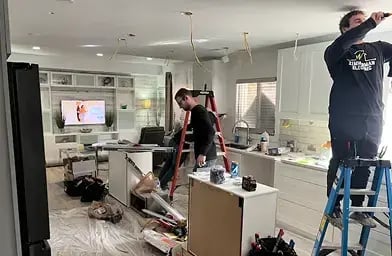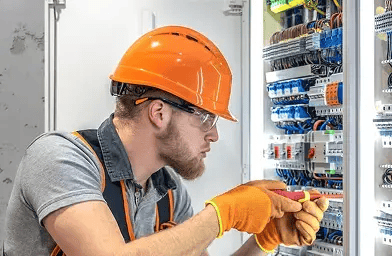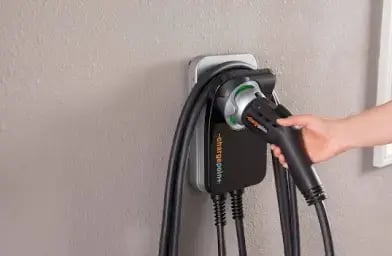

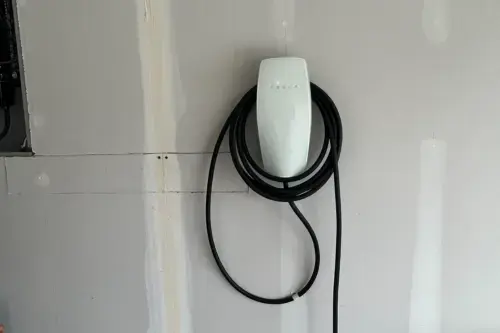
Installing a Tesla Wall Connector requires a licensed electrician who can run a dedicated 60-amp, 240-volt circuit from your electrical panel to your garage. The Gen 3 Wall Connector delivers up to 44 miles of range per hour of charging, but only when properly wired by a professional. In Indianapolis and across Central Indiana, Zimmerman Electric handles the complete installation from panel assessment and permit to final inspection, so your home charging setup works correctly from day one..webp?width=1024&height=559&name=image2%20(1).webp)
If you have recently purchased a Tesla Model 3, Model Y, Model S, or Model X, you already know the Mobile Connector that ships with the vehicle offers limited charging speed. A dedicated Wall Connector is the upgrade that makes home charging fast and practical. The question most Indianapolis Tesla owners ask us first is simple: who should actually install this? The answer is a licensed residential electrician with experience in 240-volt circuit installations and EV charger wiring.
This guide covers everything you need to know, including electrical requirements, cost ranges, permit requirements, panel upgrade considerations, and why getting this right the first time matters far more than saving a few dollars on a cut-rate installer.
|
THE ZIMMERMAN INSIGHT |
|
Tesla Wall Connector installations are not DIY-friendly. The Gen 3 unit draws up to 48 amps of continuous current on a 60-amp dedicated circuit. That means your panel needs the available capacity, your wiring needs to be correctly sized, and the work needs to be permitted and inspected before your home's insurance coverage and Tesla's warranty apply cleanly. |
|
At Zimmerman Electric, we approach every Tesla installation the same way we approach every job: panel assessment first, permit pulled before we start, work done to current NEC code, and a final walkthrough so you know exactly what was installed and why. We are a licensed, BBB-accredited contractor serving Indianapolis and all eight counties of Central Indiana. |
|
Tesla owners are typically savvy buyers. They want straight answers on cost, timeline, and what they actually need. We give that to them. No upsell pressure, no surprises on the invoice. If your panel can support the installation without an upgrade, we will tell you. If it cannot, we will explain exactly what needs to change and what it will cost. |
|
Our team has completed Tesla Wall Connector installations across Marion, Hamilton, Hendricks, Boone, Johnson, Morgan, Shelby, and Hancock counties. We handle the permit, schedule the inspection, and leave the job site clean. Call 317-830-0080 to schedule your free estimate. |
Tesla Wall Connector Electrical Requirements
Before we talk about who installs it, it helps to understand what the installation actually involves. The Tesla Wall Connector Gen 3 is a 48-amp, 240-volt Level 2 EVSE (Electric Vehicle Supply Equipment). It requires a dedicated circuit and cannot share a breaker with any other appliance or outlet.
.webp?width=1024&height=559&name=image1%20(1).webp)
Core Electrical Specifications
|
Specification |
Requirement |
|---|---|
|
Charger Type |
Level 2 EVSE |
|
Amperage Draw |
Up to 48 amps continuous |
|
Dedicated Circuit Breaker |
60-amp (125% NEC rule: 48A x 1.25 = 60A) |
|
Voltage |
240 volts / single-phase |
|
Wire Gauge |
6 AWG copper minimum |
|
Conduit |
Required for exposed runs |
|
Panel Slots Required |
2 pole, 60-amp breaker |
|
GFCI Protection |
Per NEC Article 625 requirements |
|
Permit Required |
Yes, in all Indiana jurisdictions |
The 60-amp breaker requirement comes directly from NEC 625.41, which mandates that EV charging circuits be sized at 125% of the charger's continuous load. A 48-amp charger therefore requires a 60-amp circuit. This is not a Tesla recommendation, it is an electrical code requirement that applies to every licensed installation in Indiana.
Many homeowners ask whether they can use an existing 240-volt outlet, such as a dryer outlet or a NEMA 14-30. While the voltage is correct, most of those circuits are not sized for continuous 48-amp EV charging loads. Reusing an undersized circuit voids your charger warranty and creates a genuine fire hazard. The right answer is always a new dedicated circuit.
Gen 3 Wall Connector: What Your Electrician Needs to Know
The Gen 3 Wall Connector was released by Tesla in 2020 and represents a significant upgrade over the Gen 2 model. It supports both Wi-Fi connectivity and power sharing across multiple Wall Connectors on a single circuit. Understanding these features matters for how the installation is planned.
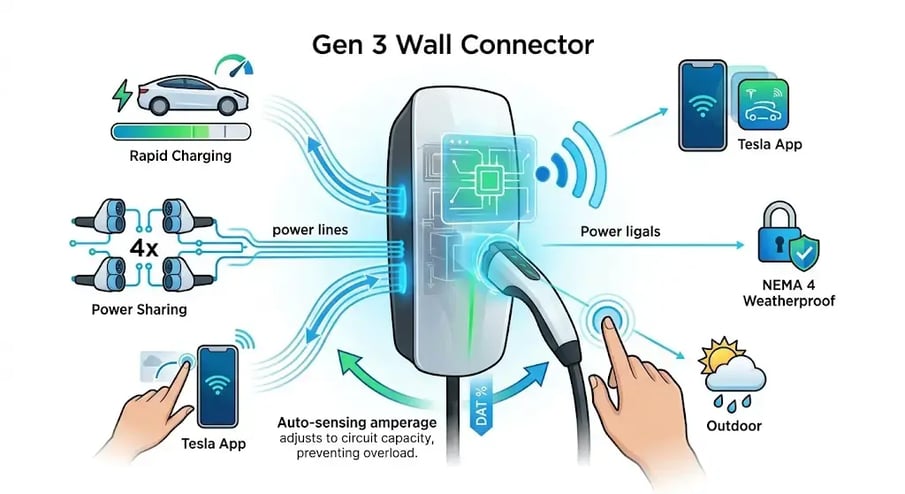
Gen 3 vs Gen 2 Wall Connector: Key Differences
|
Feature |
Gen 3 Wall Connector |
|---|---|
|
Max Charging Rate |
Up to 44 miles of range per hour |
|
Max Amperage |
48 amps |
|
Power Sharing |
Yes (up to 4 units on one circuit) |
|
Wi-Fi Connectivity |
Yes (Tesla app integration) |
|
Indoor/Outdoor Rating |
NEMA 4 rated (both indoor and outdoor) |
|
Auto-sensing Amperage |
Automatically adjusts to circuit capacity |
|
Mounting |
Wall or pedestal |
|
Cable Length |
18 or 24 feet |
|
Compatibility |
All Tesla models; J1772 with adapter |
The auto-sensing feature on the Gen 3 unit is worth noting. When your electrician programs the circuit amperage during installation, the Wall Connector automatically limits its draw to match. This means the installation needs to be configured correctly, not just physically connected. That is another reason why experience with Tesla installations specifically matters.
Outdoor Tesla Wall Connector Installation
Many Indianapolis homeowners want their Wall Connector mounted on the exterior of the garage rather than inside. The Gen 3 unit is NEMA 4 rated, which means it is rated for outdoor use in rain and dusty conditions. However, the conduit run and any junction boxes used in the installation must also be rated for outdoor exposure.
We run outdoor installations regularly across Central Indiana, including in Carmel, Fishers, Zionsville, Greenwood, and Mooresville. The approach is the same: weatherproof conduit, properly sealed penetrations, and an outdoor-rated breaker if the sub-panel is exposed. Call us at 317-830-0080 and we will assess your specific exterior setup at no charge.
Do I Need a Panel Upgrade for a Tesla Wall Connector?
This is the single most common question we hear, and the answer depends on three things: your current panel amperage, your existing electrical load, and how much available capacity remains.
|
Quick Answer: Panel Upgrade Requirement by Panel Size |
|
|
|
|
How We Assess Your Panel Before Installation
During your free estimate, one of our licensed electricians performs a load calculation on your current panel. This involves reviewing the total amperage capacity, tallying the existing circuit loads including HVAC, water heater, electric range, dryer, and any other high-draw appliances, and calculating how much capacity remains.
If you have sufficient headroom, we proceed directly to the EV charger installation. If your panel is too full or your service is too small, we will explain the upgrade path clearly and give you an honest cost breakdown for both the electrical panel upgrade and the EV charger installation together.
A combined panel upgrade and Tesla Wall Connector installation can often be completed in a single day when scheduled together. We handle the permit for both scopes simultaneously, which saves time and reduces the number of inspection visits.
100-Amp Panel Homes: What Tesla Owners Need to Know
Many older Indianapolis homes, particularly those built before 1980 in neighborhoods like Warren Township, Decatur Township, and parts of Lawrence, still have 100-amp service. A 100-amp panel running a modern home's full load typically has very little capacity left for a 60-amp EV charger circuit.
We regularly upgrade these homes from 100-amp to 200-amp service as part of an EV charger project. After the upgrade and new Tesla installation, homeowners often remark that their breakers stop tripping for the first time in years. The EV charger is just the final trigger that makes the upgrade overdue.
If your home needs both a panel upgrade and a Wall Connector installation, visit our electrical panel upgrades page to understand what a full 200-amp service upgrade involves and what it costs in the Indianapolis area.
Tesla Wall Connector vs Mobile Connector vs Level 1 Charging: Which Should You Choose?
Tesla owners have three practical home charging options. Understanding the difference makes it clear why most daily drivers end up with a Wall Connector within the first year.
|
Charging Option |
Miles of Range Per Hour |
Typical Overnight Add |
Circuit Required |
Electrician Needed? |
|---|---|---|---|---|
|
Level 1 (120V standard outlet) |
2-4 miles/hr |
16-32 miles |
Standard 15/20A outlet |
No |
|
Mobile Connector (NEMA 14-50) |
20-25 miles/hr |
160-200 miles |
50A dedicated outlet |
Recommended |
|
Gen 3 Wall Connector |
44 miles/hr |
300+ miles |
60A dedicated circuit |
Yes - required |
For a Tesla Model Y Long Range with a 77 kWh battery, Level 1 charging from empty to full takes roughly 70+ hours. The Gen 3 Wall Connector does it in under 9 hours. If you drive more than 30 miles per day or want the peace of mind of waking up to a fully charged vehicle every morning, the Wall Connector installation is the right choice.
Can I Install a Tesla Wall Connector Myself?
This question comes up often, and we want to give you the honest answer rather than just the sales answer.
Technically, a homeowner with electrical knowledge can install a Wall Connector in Indiana. Tesla does not require a certified installer the way some charging brands do. However, there are three practical reasons why DIY Wall Connector installation is a bad idea for most homeowners:
- Permits and inspections are required in all Indiana jurisdictions for 240-volt circuit additions. A DIY installation without a permit may void your homeowner's insurance coverage for any fire or damage related to the electrical work.
- The load calculation requires knowledge of your panel's actual remaining capacity. Getting this wrong risks overloading your service and creating a tripping circuit or, in the worst case, an electrical fire.
- Tesla's warranty documentation and most home insurance policies expect licensed installation for permanently mounted EVSE. A DIY installation could complicate any future claims.
The cost difference between a licensed professional installation and DIY is typically $300 to $600 in labor. Given the permit requirements, insurance implications, and safety factors, that is money well spent. We have never seen a homeowner who regretted hiring a licensed electrician for this job.
Permit Requirements for Tesla Wall Connector Installation in Indiana
Indiana requires an electrical permit for any new 240-volt circuit addition, including EV charger installations. This applies in all eight counties we serve: Marion, Hamilton, Hendricks, Boone, Johnson, Morgan, Shelby, and Hancock.
As your licensed contractor, Zimmerman Electric pulls all permits on your behalf. You do not need to visit any permit office or understand the code requirements. We handle the paperwork, schedule the inspection, and receive the final inspection sign-off.
|
WARNING: Unpermitted EV Charger Installations |
|
An unpermitted EV charger installation in Indiana can result in the following consequences: |
|
|
|
|
.webp?width=905&height=494&name=image3%20(1).webp)
Tesla Wall Connector Installation Cost in Indianapolis (2026)
Let us give you the real numbers. The Wall Connector installation cost varies based on your specific situation, but here is what most Indianapolis homeowners actually pay:
|
Installation Scenario |
Estimated Cost Range (Labor + Permit) |
|---|---|
|
Level 2 EV charger installation (labor) |
$595 base; $595–$2,000 range |
|
Tesla Wall Connector unit (supply only) |
$450 – $750 |
|
Panel upgrade (100A to 200A) + EV charger installation |
$3,095–$5,000+ |
|
Whole-home service upgrade (100A/200A meter, riser, panel) + EV charger |
$3,795–$6,200+ |
Disclaimer: All pricing shown is estimated and intended as a general reference only. Actual project pricing is subject to change based on market conditions, material costs, site conditions, scope of work, and other project-specific factors.
These ranges cover labor and permit costs only. The Level 2 EV charger unit itself (such as a Tesla Wall Connector) typically runs from $450 to $750 for supply only and is separate from the installation labor figures.
|
Cost Note from Zimmerman Electric |
|
Every project we quote is assessed individually. We do not apply flat rates without seeing your panel and running distances. Our free estimate is exactly that: free, with no pressure and no commitment. Call us at 317-830-0080 or visit our EV charger installation page to learn more about what we include in every installation. |
Federal Tax Credit for EV Charger Installation
Under the Inflation Reduction Act (IRA), homeowners who install EV charging equipment in eligible locations may qualify for the 30C Alternative Fuel Vehicle Refueling Property Credit. This credit is worth up to 30% of the installation cost, capped at $1,000 for residential properties.
To qualify, the installation must be in a low-income or non-urban census tract. Check with your tax professional to confirm eligibility for your specific address. Duke Energy and other Indiana utilities may also offer separate rebate programs for residential EV charger installations.
How Long Does Tesla Wall Connector Installation Take?
For most straightforward installations where the panel has available capacity and the run distance is moderate, the work is completed in 2 to 4 hours on the day of the appointment.
|
Installation Type |
Typical Completion Time |
|---|---|
|
Panel assessment + EV circuit installation (standard) |
2 to 4 hours |
|
Longer conduit run or sub-panel addition |
4 to 6 hours |
|
Panel upgrade (100A to 200A) + EV charger installation |
Full day (6 to 8 hours), plus utility coordination |
|
Multiple Wall Connector power sharing setup |
3 to 5 hours |
When a panel upgrade is required, the timeline extends because we need to coordinate with AES Indiana (formerly Indianapolis Power and Light) or Duke Energy to temporarily disconnect service during the upgrade. This typically adds 1 to 2 days for scheduling purposes, though the actual installation is completed in a single day once the utility disconnects are arranged.
Tesla Power Sharing: Multiple Wall Connectors on One Circuit
One of the most underutilized features of the Gen 3 Wall Connector is power sharing. If you have two or more Teslas or want to install additional Wall Connectors for guests or family members, the Gen 3 units can be wired together in a daisy-chain configuration and share a single circuit.
Up to four Gen 3 Wall Connectors can share a single circuit. The units communicate via the daisy-chain cable and automatically distribute available amperage between vehicles that are actively charging. This means you can add a second Wall Connector without necessarily adding a second 60-amp circuit to your panel.
The power sharing setup requires careful configuration during installation and must be done by an electrician familiar with the Gen 3 power sharing architecture. We have completed multi-unit installations in both residential and commercial settings across Central Indiana.
Protect Your Tesla Wall Connector with Whole-House Surge Protection
The Tesla Wall Connector is a Wi-Fi-connected electronic device with sensitive onboard circuitry. Indiana's severe thunderstorm season sends damaging voltage spikes through utility lines every year, and those spikes can damage or destroy EV charger electronics just as easily as they damage televisions or appliances.
We strongly recommend pairing every Tesla Wall Connector installation with a whole-house surge protector installed at the main panel. A panel-level surge protector clamps voltage spikes before they reach any circuit in the home, including the dedicated EV charger circuit. The cost is modest (typically $200 to $400 installed) and the protection it provides for a $400+ charger and $40,000+ vehicle is significant.
Most of our EV charger installations now include a surge protector as a bundled option. Ask about it during your free estimate.
Why Zimmerman Electric for Tesla Wall Connector Installation in Indianapolis
There is no shortage of electricians in the Indianapolis metro. Here is what distinguishes Zimmerman Electric for Tesla-specific installations:
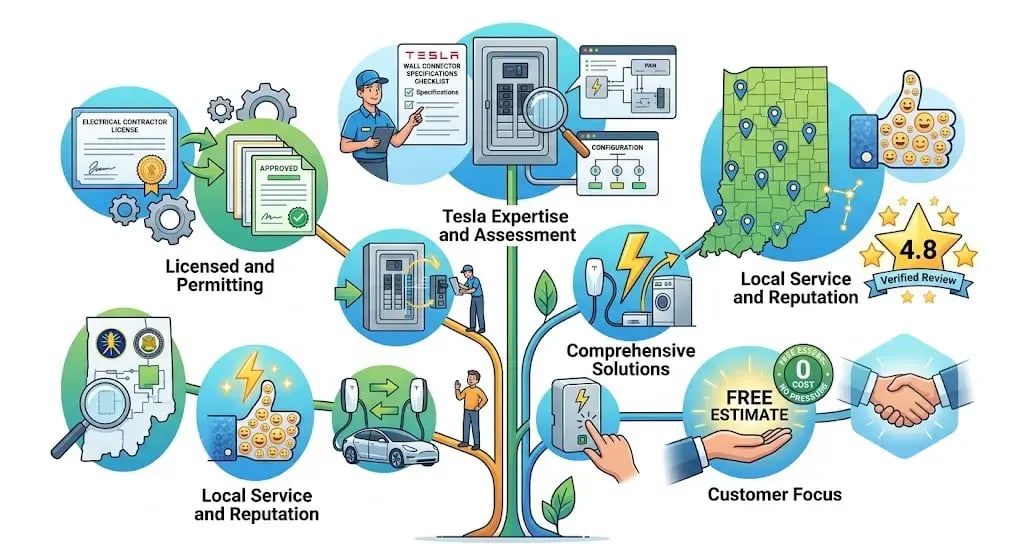
|
What Indianapolis Tesla Owners Ask |
What Zimmerman Electric Delivers |
|---|---|
|
Are you a licensed electrician in Indiana? |
Yes. Licensed, insured, and BBB-accredited. |
|
Can you pull the permit? |
Yes. We handle all permitting in every county we serve. |
|
Do you know the Tesla Gen 3 installation specs? |
Yes. We assess, configure, and program the circuit correctly. |
|
Will you assess my panel first? |
Yes. Free panel assessment with every EV estimate. |
|
Can you also do a panel upgrade if needed? |
Yes. Panel upgrades and EV installs done in coordination. |
|
Do you install surge protection too? |
Yes. Whole-house surge protectors bundled on request. |
|
Can you install multiple Wall Connectors? |
Yes. Power sharing setups for multi-vehicle households. |
|
Are you available in Hamilton/Hendricks/Boone County? |
Yes. All 8 Central Indiana counties covered. |
|
What is your Google rating? |
4.8 stars across 100+ verified reviews. |
|
Is the estimate free? |
Yes. No charge, no pressure, no commitment. |
Our residential electrical services cover everything from simple repairs to full panel replacements and EV charging infrastructure. We serve homeowners and businesses across Marion, Hamilton, Hendricks, Boone, Johnson, Morgan, Shelby, and Hancock counties.
If you have a commercial property or fleet operation with multiple EVs, visit our commercial electrical services page to learn about our commercial EV charging and electrical infrastructure capabilities.