Commercial EV Charger Maintenance vs. Reactive Repairs: Which Costs Indianapolis Businesses Less?
Installing Electric Vehicle chargers is a good idea. But making sure they keep w.
CALL US NOW! 317-939-9197
Implementing a comprehensive surge protection strategy is essential.Protect your home and everything in it from unexpected power surges that can destroy appliances, electronics, and your electrical system sometimes in a fraction of a second.
Serving Central Indiana since 2022 with code-compliant electrical excellence.
At Zimmerman Electric, we install whole-house surge protectors for Indianapolis homeowners who want real, comprehensive protection for their home's electrical system. A single power surge can damage your refrigerator, HVAC system, flat-screen TVs, computers, and smart home devices all at once and most homeowners don't realize how frequently surges occur.
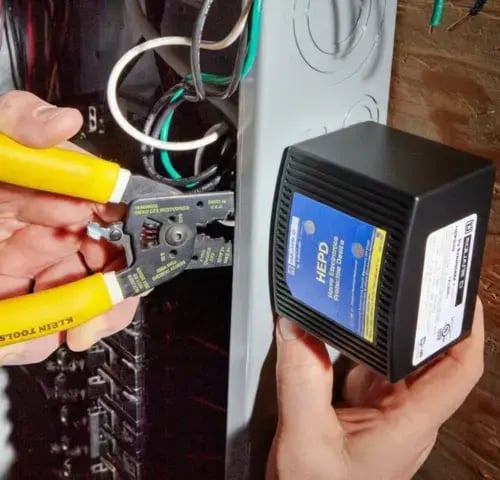
Unlike the power strips you plug into the wall, a whole-house surge protector is installed directly at your main electrical panel. It acts as the first and most powerful line of defense, blocking or diverting excess voltage before it ever reaches your devices.
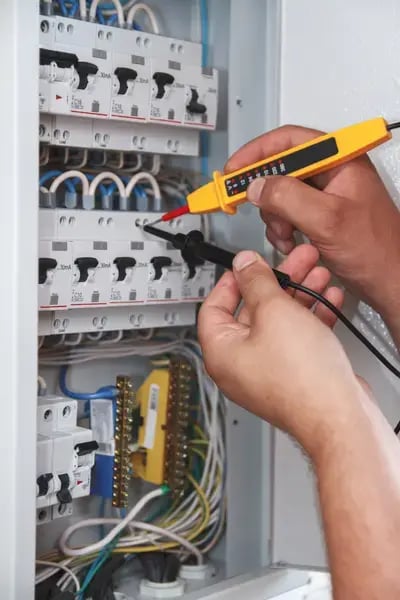
Our certified electricians handle the entire installation from start to finish. We assess your current electrical panel, install the right surge protection device for your home's size and needs, test the system, and walk you through exactly how it works and what it protects.
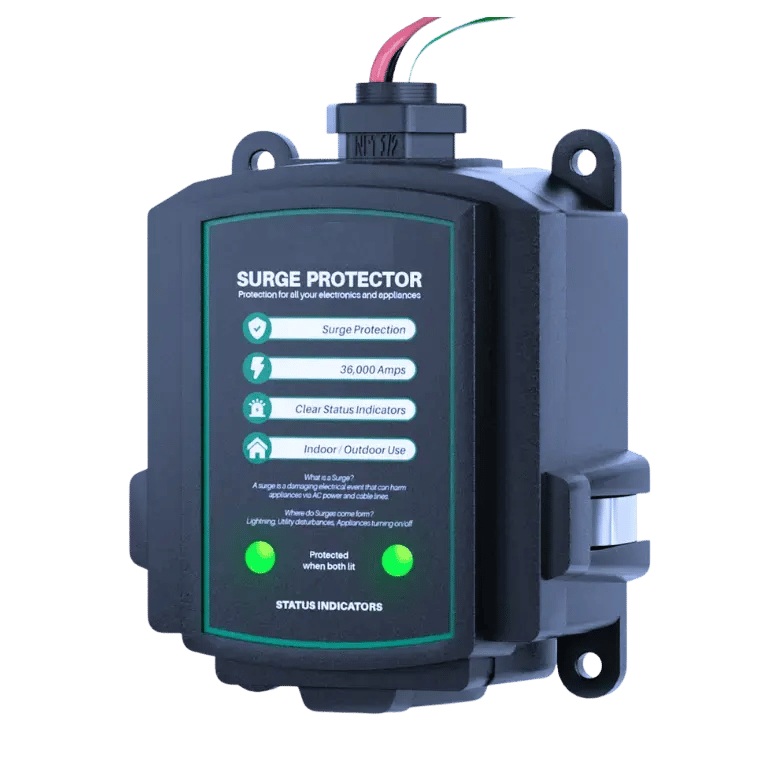
A whole-house surge protector is a device installed at your main electrical panel that monitors the voltage entering your home's electrical system at all times. When a power surge occurs whether from lightning, a utility company switching event, or a large appliance cycling on the surge protector instantly detects the excess voltage and diverts it safely to ground before it can damage anything connected to your circuits.
Unlike a standard power strip surge protector, which only protects the devices plugged into it, a whole-house surge protector shields every outlet, appliance, light fixture, and piece of equipment in your entire home including your HVAC system, washer, dryer, water heater, and built-in appliances that can't be plugged into a strip.
Not sure if your panel needs attention? Here are the most common warning signs our Indianapolis customers report before calling us:
Homes built before the 1980s often have panels that were never designed to handle the electrical load of modern living. Older panels — including Federal Pacific and Zinsco brands — have documented safety defects and are no longer considered code-compliant in many jurisdictions. If your home is over 40 years old and has never had a panel upgrade, a professional inspection is strongly recommended.
A circuit breaker that trips occasionally is doing its job. Breakers that trip regularly — especially under normal household use — are a sign that your panel is consistently overwhelmed by demand. This is not just frustrating; it indicates that your home's power supply is operating at or beyond its safe capacity.
If your home uses fuses rather than circuit breakers, it's operating on technology from several decades ago. Fuse-based systems are less reliable, harder to reset after an overload, and significantly more prone to fire hazards during high-demand periods. Upgrading to a modern circuit breaker panel dramatically improves safety and reliability.
If your lights dim or flicker when your refrigerator compressor kicks on, your HVAC starts, or you run a microwave — your panel is struggling to distribute power cleanly. This is a sign of an undersized service or a panel that can no longer manage load balancing effectively.
A burning smell near your electrical panel is an emergency. Turn off the main breaker and call a licensed electrician immediately. This is one of the clearest warning signs that your panel is overheating — a condition that can lead to electrical fire.
Planning to add an EV charger, a new HVAC system, a hot tub, or additional appliances? These high-draw additions often require panel upgrades to accommodate the added amperage safely. Don't add high-demand equipment to an already-strained panel without a professional assessment first.
Reach us by phone at 317-939-9197 or submit a free estimate request on our website. You'll speak with a real person , not a bot or an automated system.
We visit your home, assess the work, and give you a clear written estimate before anything begins. No pushy upsells. No commitment required. You decide if and when to move forward.

We work on your schedule. You'll know exactly who is coming, when they'll arrive, and what they'll be doing, with updates along the way.
Our team arrives on time, wears shoe covers, and treats your home with complete respect. All work is done to code. All the mess is cleaned up before we leave.
Fill out the form and our team will reach out within 24 hours to discuss your project and provide a transparent, no-obligation quote.
At Zimmerman Electric, we understand that electrical work isn't just about wires and breakers, it's about the safety and comfort of your family and home. We're not a franchise, a call center, or a large corporation. We're Zach and Kara Zimmerman, a husband-and-wife team who started this company to serve Indianapolis with honesty, integrity, and genuine craftsmanship.
Every electrician we send to your home is licensed, background-checked, and trained to do the job right. We wear shoe covers, clean up every mess we make, and won't leave until the work is done correctly and you're completely satisfied.
Zimmerman Electric is a local Indianapolis business, not a franchise or national chain. The owner stands behind every project, and you speak with local community members when you call.
Every electrician on our team is fully licensed and insured. We are registered with the Indianapolis Department of Business and Neighborhood Services (BNS), and all our work meets or exceeds the National Electrical Code. We pull all required permits and schedule inspections.
Our reputation is built on hundreds of positive reviews from real Indianapolis homeowners. We earn our rating on every job through quality workmanship for your home.
We maintain our Better Business Bureau accreditation because we believe in transparency, accountability, and resolving any concern quickly and fairly.
Our electricians always wear shoe covers, lay down drop cloths where needed, and clean up completely before leaving.
We provide detailed written estimates before work begins. No hidden fees, no surprise charges. You approve the scope and price before we start.
From new construction to emergency repair, from a single outlet replacement to a complete whole-home rewire, Zimmerman Electric handles the full scope of residential electrical work.
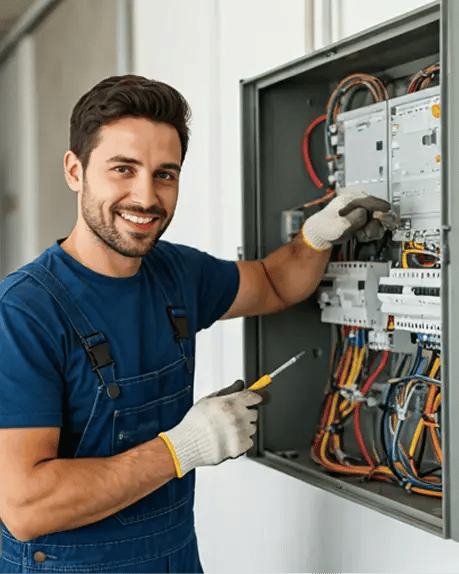
"Our mission is to keep Indianapolis families safe and powered with expert craftsmanship."
Our commitment to 100% code-compliant excellence is reflected in the trust of homeowners and businesses across Indiana.
“Zimmerman Electric has been great to work with. Within two hours of first calling they were on site and provided the estimate. The team went above and beyond what was certainly a challenging installation. I am very impressed and will absolutely recommend them to anyone needing electrical services.”
“Zimmerman electric is fast and efficient. I had messaged them a few days ago and wanted a price to install a Tesla wall charger at my house. He gave me a quote the same day and was able to install it before I brought the vehicle home. They did great work and cleaned up any mess they created after the work was done. They did a great job and would highly recommend them for all your electrical needs.”
“Had a great experience with Zimmerman as they helped me install my home EV charger.They were quick to give an estimate, got me booked within a week and did great work! Highly recommend, great experience all around!”
“Zimmerman Electric has been great to work with. Within two hours of first calling they were on site and provided the estimate. The team went above and beyond what was certainly a challenging installation. I am very impressed and will absolutely recommend them to anyone needing electrical services.”
“Zimmerman electric is fast and efficient. I had messaged them a few days ago and wanted a price to install a Tesla wall charger at my house. He gave me a quote the same day and was able to install it before I brought the vehicle home. They did great work and cleaned up any mess they created after the work was done. They did a great job and would highly recommend them for all your electrical needs.”
“Had a great experience with Zimmerman as they helped me install my home EV charger.They were quick to give an estimate, got me booked within a week and did great work! Highly recommend, great experience all around!”
Lorem ipsum dolor sit amet, consectetur adipiscing elit. Nunc vulputate libero et velit interdum, ac aliquet odio mattis.
Every year, Indianapolis homeowners spend thousands of dollars replacing appliances, HVAC components, and electronics that were damaged by power surges. What makes this frustrating is that the majority of this damage is preventable. A single surge protection device, installed professionally at your main panel, would have stopped most of it.
Yet most homeowners either don't know whole-house surge protectors exist, think their power strip is enough, or assume surge damage only happens during severe lightning storms. None of these things are true.
A power surge is a sudden, brief spike in electrical voltage that exceeds the normal level in your home's wiring. Your home runs on 120 or 240 volts depending on the circuit. A power surge pushes voltage above that safe operating range — sometimes by a little, sometimes by a lot — and that excess energy has to go somewhere. When it does, it flows through your appliances, electronics, and wiring, and it causes damage.
Power surges have multiple causes, and most of them have nothing to do with lightning.
More often than you think. A typical American home experiences dozens of minor surges every single day, mostly from appliances cycling on and off. These minor surges are below the threshold you'd notice — the lights don't flicker, nothing shuts off — but over time, cumulative small surges degrade the electronic components inside your appliances and devices. This is why modern appliances sometimes fail years before they should. The damage is cumulative and invisible.
Surge damage can be immediate and obvious — an appliance that stops working right after a storm — or slow and invisible. Slow surge damage degrades electronic components inside your appliances over months and years, reducing their lifespan significantly. A refrigerator rated to last 15 years might fail at 8 or 9 because of accumulated surge damage to its electronic control board.
The most expensive items in a typical Indianapolis home are particularly vulnerable: variable-speed HVAC systems with sophisticated electronic controls, smart appliances with digital interfaces, home automation systems, computers and networking equipment, EV charging stations, and solar panel inverters.
A whole-house surge protector — also called a whole-home surge protector, a service entrance surge protector, or a Type 1 or Type 2 SPD (Surge Protective Device) — is a device installed directly at your home's main electrical panel or meter base. It monitors the voltage entering your home's electrical system at all times.
When a surge is detected, the device activates in nanoseconds — faster than any human reaction could register — and diverts the excess voltage safely to ground before it can travel through your wiring and damage anything in your home.
Unlike a power strip surge protector that sits between one outlet and the devices plugged into it, a whole-house surge protector sits between the utility line and your entire home. It protects everything — every outlet, every circuit, every hardwired appliance, every device — all at once, from a single installation point.
Here is what happens during a surge event when a whole-house surge protector is installed:
The whole process happens automatically, silently, and in less time than it takes to blink. You don't need to do anything. The device works 24 hours a day, 7 days a week, with no energy consumption and no ongoing maintenance beyond periodic inspection.
This is one of the most common questions we get — and one of the most important to understand clearly.
|
Whole-House Surge Protector |
Power Strip Surge Protector |
|
Installed at your main electrical panel by a licensed electrician |
Plugged into a wall outlet by anyone |
|
Protects your entire home — every circuit, outlet, and hardwired appliance |
Protects only the devices plugged directly into that strip |
|
Protects hardwired appliances: HVAC, water heater, built-in appliances |
Cannot protect anything that doesn't plug into the strip |
|
Rated for much higher surge energy (kilo-joules) |
Lower rated capacity — can be overwhelmed by large surges |
|
Works alongside power strips for layered protection |
Is the only protection if no whole-house device is installed |
|
One-time installation — protects for years |
Requires replacement after a major surge event |
|
Passive — no energy draw, no maintenance required |
Often has indicator lights, requires outlet access |
The bottom line: a power strip offers some protection for the devices plugged into it. A whole-house surge protector offers comprehensive protection for everything in your home. Both have a role — and the best protection strategy uses both together.
The honest answer is: every Indianapolis homeowner. But there are situations where surge protection is especially critical. Here are the most important ones.
Indiana sits in a region that experiences frequent and severe thunderstorms, particularly from late spring through early fall. The Indianapolis area sees dozens of significant storm events per year, and lightning strikes near utility infrastructure are common. Even when lightning doesn't strike your home directly, it can send devastating surges through miles of utility lines. If you live anywhere in Marion County, Hamilton County, Hendricks County, Johnson County, or the surrounding areas, storm-related surge risk is real and ongoing.
Indianapolis has a large inventory of older homes — many built before 1980, some before 1950. Homes in neighborhoods like Broad Ripple, Meridian-Kessler, Irvington, Southport, and many older suburbs in the surrounding counties often have wiring and panel configurations that are more vulnerable to surge damage. Older wiring provides less inherent protection against voltage spikes, and older panels may not distribute power as cleanly as modern systems.
If your home has ever had a panel assessment and you've been told the wiring is aging or the panel is original — whole-house surge protection is not optional. It's foundational.
Modern appliances are vastly more sensitive to voltage fluctuations than appliances from 20 years ago. A refrigerator from 1985 had a simple mechanical thermostat. A modern refrigerator has electronic control boards, touch interfaces, Wi-Fi connectivity, and sensors. Every one of those electronic components is a potential failure point when a surge hits.
If your home has smart appliances, a home theater, smart home automation, gaming systems, home office equipment, multiple computers, or any combination of expensive electronics — the math is simple. The cost of protecting them with a whole-house surge protector is dramatically less than replacing even one major appliance.
Modern variable-speed HVAC systems are engineering marvels — and they are also extremely sensitive to electrical disruptions. The inverter drives, variable-speed motors, and electronic control systems in a modern high-efficiency HVAC unit can cost thousands of dollars to repair or replace when damaged by a surge. Many HVAC manufacturers now recommend or require whole-house surge protection as a condition of their equipment warranties.
If you have recently invested in a new HVAC system in your Indianapolis home, surge protection is one of the smartest follow-on investments you can make.
EV charger installations have surged (pun intended) across Indianapolis and its suburbs, particularly in high-income communities like Carmel, Fishers, and Zionsville where EV adoption rates are among the highest in Indiana. A Level 2 home EV charger is a significant electrical installation — and the onboard electronics in both the charger and the vehicle itself are vulnerable to surge damage. Protecting your EV charging infrastructure with a whole-house surge protector is a logical extension of the investment you've already made.
Solar panel inverters and battery backup systems represent thousands of dollars in equipment that converts, stores, and manages electrical energy. These systems are connected directly to your home's electrical infrastructure and are fully exposed to incoming surges from the utility line. Surge protection is a standard recommendation from most solar installers — and if yours didn't mention it, it's worth having a conversation.
You shouldn't have to worry about unplugging your appliances every time a storm rolls through Central Indiana. A whole-house surge protector eliminates that concern. Once it's installed, it works silently and automatically — and you can stop thinking about it.
Installing a whole-house surge protector is one of the best-value electrical upgrades available to an Indianapolis homeowner. Here is what you gain:
A whole-house surge protector covers every circuit in your home from a single installation point. That includes your HVAC system, refrigerator, washer, dryer, water heater, range, dishwasher, lighting circuits, and every outlet throughout the house — including hardwired appliances that could never be protected by a power strip. This is the most complete form of protection available.
Even small, repeated surges that you never notice degrade the electronic components in your appliances over time. This is called cumulative degradation — and it's one of the leading causes of premature appliance failure. By eliminating the daily bombardment of minor voltage spikes, a whole-house surge protector helps your appliances last closer to their rated lifespan. In a home full of modern appliances, the extended lifespan value alone often exceeds the installation cost many times over.
Your HVAC system, refrigerator, smart appliances, EV charger, home office equipment, and solar system represent tens of thousands of dollars in investment. Protecting these assets with a surge protection device that costs a small fraction of their replacement value is straightforward insurance logic. The risk-reward calculation is clear.
A whole-house surge protector works passively. It does not consume electricity during normal operation. It monitors the incoming voltage continuously without drawing measurable current — which means there is no impact on your monthly energy bill. This is a set-it-and-forget-it device.
A whole-house surge protector and individual power strip protectors work together, not instead of each other. The whole-house device handles the large external surges from lightning and utility events. Power strips provide an additional layer of protection at the device level for smaller, residual voltage variations. Using both is the professional recommendation for maximum protection.
Indianapolis and Central Indiana experience some of the most active storm seasons in the Midwest. Knowing that your electrical system is protected — without needing to run through the house unplugging appliances before a storm — is genuinely valuable. Many of our customers cite peace of mind as one of the primary reasons they're glad they had the installation done.
At Zimmerman Electric, we've made the installation process as smooth and straightforward as possible for Indianapolis homeowners. Here is exactly what to expect.
We start with a free, no-obligation visit to your home. Our licensed electrician evaluates your main electrical panel, confirms your service size, and assesses any factors that might affect the installation. We discuss any specific concerns you have — EV charger, solar system, new HVAC, aging wiring — and recommend the right surge protection device for your home's specific needs. You receive a clear, written price before any work is scheduled. No pressure, no surprises.
Depending on your jurisdiction, surge protector installation may require a permit. Zimmerman Electric handles any required permitting with the local authority on your behalf. We then schedule the installation at a time that works for your household — typically available within a few business days of your estimate.
Our licensed electrician installs the surge protector directly at your main breaker panel. The installation requires a brief power interruption — typically 30 to 60 minutes. Most whole-house surge protector installations are completed in under 2 hours from start to finish. We wear shoe covers, keep the work area clean, and treat your home with the same respect we'd want for our own.
Once the installation is complete, we test the device to confirm it is functioning correctly and providing active protection to your entire system. We walk you through the indicator lights and what they mean so you always know your home is protected. If the device ever loses protection capacity — which can happen after an extremely large surge event — you'll know exactly what to look for.
We clean up completely before we leave. You receive documentation of the installation, the device warranty information, and any permit or inspection records. This documentation is valuable for your homeowner's insurance records and for disclosure purposes if you ever sell the home.
This is one of the most searched questions on this topic — and it deserves a direct, honest answer.
The cost of whole-house surge protector installation in Indianapolis typically ranges depending on your panel configuration, the service size of your home, the specific device selected, and any additional work required. Zimmerman Electric provides free, written estimates for every project so you know exactly what you're paying before any work begins.
As a general reference point for Indianapolis homeowners:
|
Home Type / Scenario |
Scope |
Pricing Note |
|
Standard residential installation (100-200 amp panel) |
Single surge protection device at main panel |
Typical range: contact us for a free estimate |
|
Homes with EV chargers or solar |
May benefit from enhanced protection devices |
Higher-capacity devices available — free assessment |
|
Older homes with 60-100 amp service |
Panel assessment recommended alongside installation |
Combined estimate provided at no cost |
|
Multi-panel or larger homes |
Additional protection points may be recommended |
Custom estimate — call 317-939-9197 |
We don't publish exact pricing here because the right answer for your home depends on factors we can only evaluate in person. What we can tell you is that we provide honest, competitive pricing, no hidden fees, and a clear written estimate before any work begins.
Yes — emphatically. Consider the math:
A whole-house surge protector costs a fraction of replacing even one of these items — and it protects all of them simultaneously, for years. This is not a luxury upgrade. For most Indianapolis homeowners, it is the smartest single electrical investment available.
Indianapolis and the surrounding counties have specific characteristics that make whole-house surge protection particularly valuable compared to many other U.S. markets.
Central Indiana sits in the path of weather systems that produce some of the most frequent and severe thunderstorms in the Midwest. The Indianapolis metro area experiences significant lightning activity from late spring through early fall. Marion County, Hamilton County, Hendricks County, Johnson County, and surrounding counties all see regular storm events that can send surges through utility infrastructure across wide geographic areas.
NOAA data consistently shows Indiana among the states with high lightning strike frequency. For homeowners in Carmel, Fishers, Noblesville, Westfield, Zionsville, Brownsburg, Avon, Greenwood, and Indianapolis proper — lightning-related surge risk is a year-round reality, not a hypothetical.
The Indianapolis metro area includes substantial housing stock from the mid-20th century — particularly in established neighborhoods like Broad Ripple, Meridian-Kessler, Irvington, Fountain Square, and Southport, as well as older suburbs in the surrounding counties. These homes were built before modern appliances and electronics created today's surge vulnerability, and many still have original or older panel configurations.
Older wiring and panels provide less inherent filtering of incoming voltage variations. For these homes, a whole-house surge protector is a critical upgrade that bridges the gap between legacy infrastructure and modern appliance sensitivity.
Homes served by AES Indiana (formerly Indianapolis Power & Light) are connected to a utility grid that, like all utility grids, experiences switching events, load changes, and transmission line disturbances that send minor surges through residential lines regularly. This is not a criticism of AES Indiana — it is simply how utility grids operate at scale. A whole-house surge protector provides the buffer between the grid and your home's electrical system that protects against these routine events.
Carmel, Fishers, Noblesville, Westfield, and Zionsville have some of the highest rates of EV adoption and smart home technology installation in Indiana. These communities have concentrated the kind of high-value, surge-sensitive equipment that makes whole-house surge protection not just advisable — but close to essential. If you've invested in a Level 2 EV charger, a smart home system, or a modern HVAC unit in these communities, surge protection should be part of that conversation.
When your electrician recommends a whole-house surge protector, you may hear references to Type 1, Type 2, or Type 1+2 devices. Here is a plain-language explanation.
Type 1 devices are installed at the point where your utility service enters your home — typically at the meter base or just inside the service entrance. They are designed to handle the largest external surges, including lightning-related events traveling on utility lines. Not all homes require Type 1 devices — this depends on your service configuration and local code requirements.
Type 2 devices are installed at the main distribution panel inside your home. This is the most common type of whole-house surge protector installation for residential customers in Indianapolis. A Type 2 device handles surges that originate both externally (from the utility) and internally (from large appliances in your home). For most Indianapolis homeowners, a properly rated Type 2 device provides comprehensive protection.
Some modern devices combine Type 1 and Type 2 protection in a single unit. These can provide exceptional whole-home coverage from a single installation point. Zimmerman Electric will recommend the appropriate device type for your specific panel configuration and home characteristics during your free estimate.
Not all surge protectors are created equal. Here are the key specifications that matter:
A single layer of protection is good. Two layers are better. Electrical professionals consistently recommend a layered approach to surge protection:
This is the primary defense. A whole-house surge protector installed at your main panel handles the large external surges from lightning, utility events, and grid disturbances. It stops the big energy events before they even enter your home's wiring. This is the most important installation.
For your most sensitive and valuable equipment — home theater systems, computers, gaming systems, smart home hubs — a quality point-of-use surge protector (not a cheap power strip, but a properly rated surge protective device) provides a second layer of filtering. This handles residual voltage variations and internal surges from appliances on the same circuits.
GFCI outlets in kitchens, bathrooms, garages, and outdoor locations provide ground fault protection — which is a different type of electrical safety but works alongside surge protection as part of a comprehensive electrical safety strategy. Indiana electrical code requires GFCI protection in these locations, and Zimmerman Electric installs and services GFCI outlets throughout Indianapolis and surrounding communities.
Zimmerman Electric installs whole-house surge protectors for homeowners throughout Indianapolis and Central Indiana. We serve Marion County and all surrounding communities.
|
Primary Service Areas |
Additional Areas Served |
|
Indianapolis (Marion County) |
Hamilton County (Carmel, Fishers, Noblesville, Westfield) |
|
Hendricks County (Brownsburg, Avon, Plainfield) |
Johnson County (Greenwood, Southport) |
|
Boone County (Zionsville) |
Hancock County (Greenfield, Fortville) |
|
Morgan County (Mooresville) |
Shelby County (Shelbyville) |
|
Lawrence, Speedway, Beech Grove |
Franklin, Danville, Broad Ripple |
Not sure if we service your area? Call us at 317-939-9197 — we'll let you know right away.
Zimmerman Electric is a family-owned, licensed electrical company serving Indianapolis and Central Indiana. Zach and Kara Zimmerman built this company on honesty, integrity, and a genuine commitment to the communities they serve.
Zimmerman Electric specializes in residential electrical upgrades across Marion, Boone, Hamilton, Hendricks, Morgan, Johnson, Shelby, and Hancock counties. Whether you’re updating an older home or preparing for future technologies, our licensed electricians focus on practical improvements that stand up to real-world use and local code requirements.
Contact us today to schedule a free estimate and take the next step toward a safer, smarter, and more efficient home.
Get a professional assesment and a clear, no-obligation quote from our expert Indianapolis team.
If your panel is more than 25–30 years old, uses fuses instead of breakers, is a known defective brand like Federal Pacific or Zinsco, or your breakers trip frequently — an upgrade improves safety, adds capacity, brings your home up to code, and removes a significant fire risk. Modern panels are also required by most insurance companies and are a positive factor when selling your home.
Federal Pacific panels are typically gray or beige with 'Federal Pacific' or 'Stab-Lok' printed on the door. Zinsco panels are often tan or gray with 'Zinsco' or 'GTE-Sylvania' printed on the label. If you're not sure, take a photo of your panel and call us — we can often identify it from a photo and tell you whether replacement is recommended.
Most modern Indianapolis homes are best served by a 200-amp panel, which provides ample capacity for today's household electrical demands. If you're planning to add an EV charger, solar panels, or significant new appliances, we'll factor those into our recommendation during your free assessment. Some larger homes or homes with significant additions may benefit from a 400-amp service.
Most residential panel upgrades are completed within one full working day. Larger or more complex upgrades — or those requiring a utility service upgrade — may take an additional day. We give you a specific timeline during your estimate so you can plan accordingly.
Yes. Electrical panel upgrades require a permit in Indianapolis and throughout Marion County. This is not optional — unpermitted panel work creates serious liability and can affect your homeowner's insurance and your ability to sell the home. Zimmerman Electric handles the permit application, schedules the required inspection, and ensures all work passes — at no extra burden to you.
A fuse box uses one-time-use fuses that blow when a circuit is overloaded. A circuit breaker panel uses resettable breakers that trip and can be reset without replacing anything. Breaker panels are safer, more reliable, easier to manage, and meet current electrical code. Fuse boxes are considered obsolete and are a red flag for insurance companies and home buyers.
No. Electrical panel work must be performed by a licensed electrician. Working inside the main panel involves your home's full electrical service, which remains energized at the utility connection even when your main breaker is off. This is extremely dangerous for anyone without proper training and equipment. Unpermitted panel work also violates building codes and can void your homeowner's insurance.
Panel upgrade costs vary based on your current panel configuration, the size of the new panel, whether a service upgrade is needed, and any additional work required to bring your system up to code. We provide free, written estimates for every project so you know exactly what you're paying before any work begins. Call 317-939-9197 or request an estimate online.
Stay informed with practical tips and expert advice from Zimmerman Electric.
Installing Electric Vehicle chargers is a good idea. But making sure they keep w.
Commercial fleet electrification is accelerating across Indianapolis and central.
“EV-ready” and “EV chargers installed” are often used interchangeably—but they a.
Your Free Estimate is One Click Away.
No pressure. No hidden fees. Just honest electrical work from Indianapolis's most trusted family-owned electricians.