
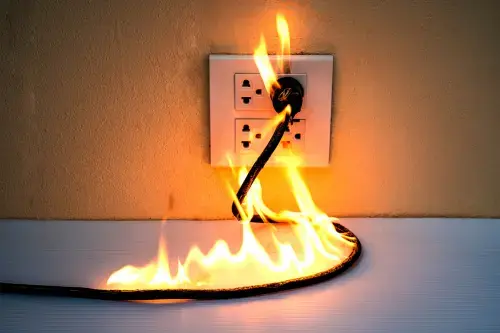
Residential Electrical Safety Checklist for Indianapolis Homeowners
A residential electrical safety inspection checklist covers ten core areas every.
CALL US NOW!  317-939-9197
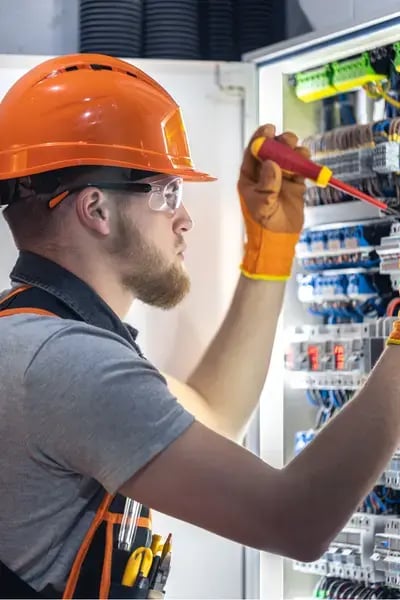
Serving Central Indiana since 2022 with code-compliant electrical excellence.
Zimmerman Electric Indy's panel upgrade speaks to one of the most overlooked safety risks in Indianapolis homes: an outdated or overloaded electrical panel. Our service cuts through the noise by laying out the real warning signs.
Frequently tripping breakers, flickering lights, fuse boxes, panels over 40 years old, and known fire-hazard brands like Federal Pacific and Zinsco that most insurers no longer cover. It positions a panel upgrade not as a discretionary expense, but as a foundational safety investment that adds capacity for modern demands like EV chargers and smart home systems, reduces fire risk, protects insurance coverage, and improves resale value.
Zimmerman Electric Indy handles the entire process of free assessment, permits, AES Indiana utility coordination, installation, city inspection, and final panel walkthrough.
So homeowners don't have to navigate any of it alone. Backed by a 4.9-star Google rating and verified BBB accreditation, this is a family-owned Indianapolis team that does the job right, once, with no hidden fees and no pressure.
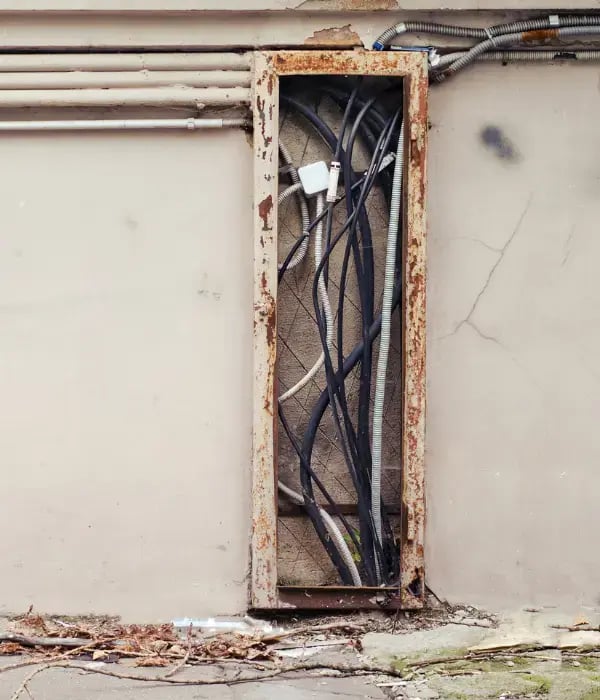
Homes built before the 1980s often have panels that were never designed to handle the electrical load of modern living. Older panels — including Federal Pacific and Zinsco brands — have documented safety defects and are no longer considered code-compliant in many jurisdictions. If your home is over 40 years old and has never had a panel upgrade, a professional inspection is strongly recommended.
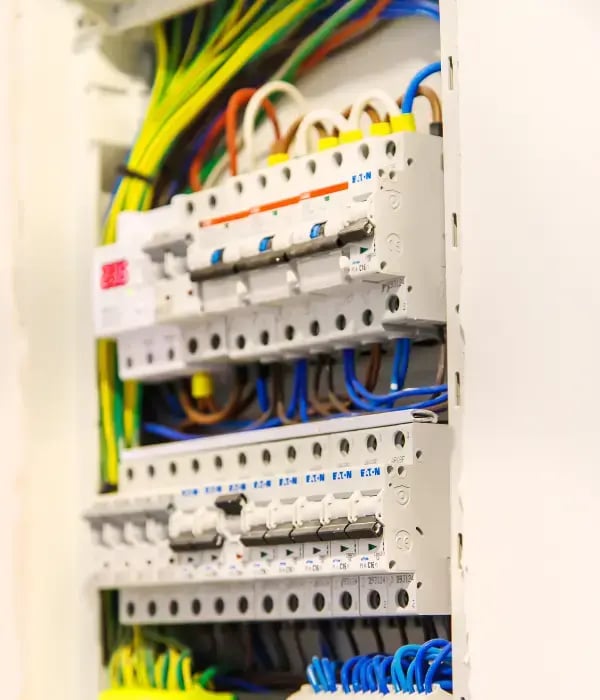
A circuit breaker that trips occasionally is doing its job. Breakers that trip regularly — especially under normal household use — are a sign that your panel is consistently overwhelmed by demand. This is not just frustrating; it indicates that your home's power supply is operating at or beyond its safe capacity.
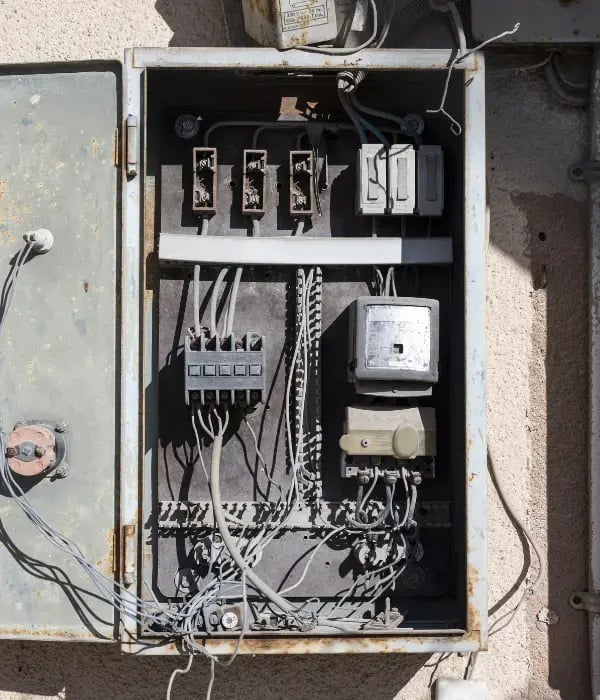
If your home uses fuses rather than circuit breakers, it's operating on technology from several decades ago. Fuse-based systems are less reliable, harder to reset after an overload, and significantly more prone to fire hazards during high-demand periods. Upgrading to a modern circuit breaker panel dramatically improves safety and reliability.
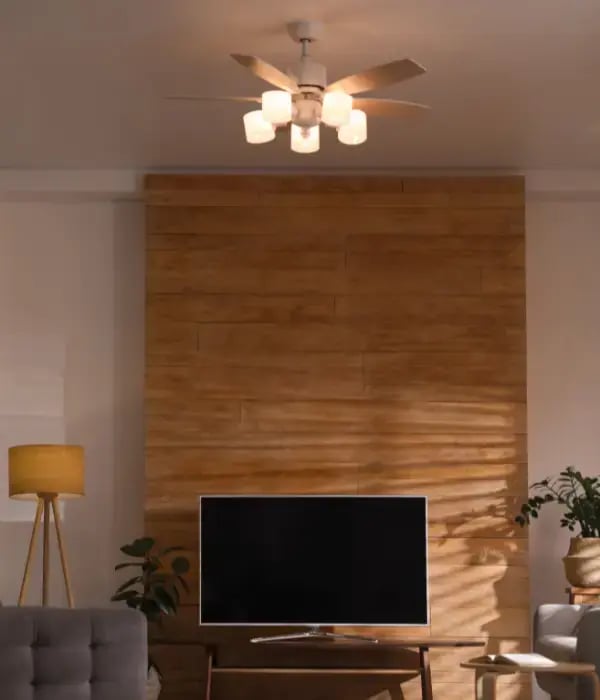
If your lights dim or flicker when your refrigerator compressor kicks on, your HVAC starts, or you run a microwave — your panel is struggling to distribute power cleanly. This is a sign of an undersized service or a panel that can no longer manage load balancing effectively.
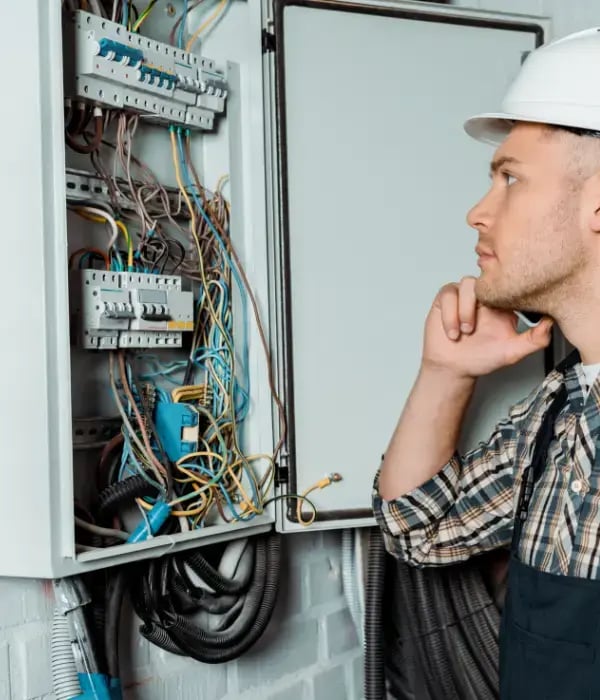
A burning smell near your electrical panel is an emergency. Turn off the main breaker and call a licensed electrician immediately. This is one of the clearest warning signs that your panel is overheating — a condition that can lead to electrical fire.
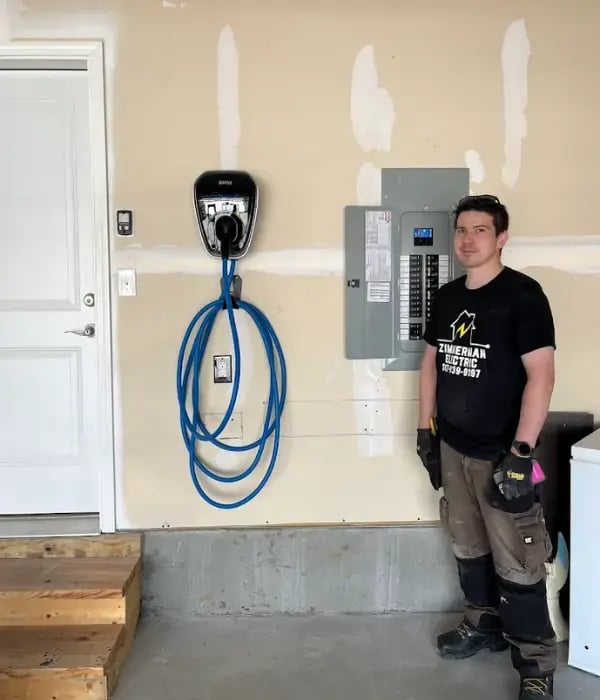
Planning to add an EV charger, a new HVAC system, a hot tub, or additional appliances? These high-draw additions often require panel upgrades to accommodate the added amperage safely. Don't add high-demand equipment to an already-strained panel without a professional assessment first.

Reach us by phone at 317-939-9197 or submit a free estimate request on our website. You'll speak with a real person , not a bot or an automated system.


We visit your home, assess the work, and give you a clear written estimate before anything begins. No pushy upsells. No commitment required. You decide if and when to move forward.
We work on your schedule. You'll know exactly who is coming, when they'll arrive, and what they'll be doing, with updates along the way.
Our team arrives on time, wears shoe covers, and treats your home with complete respect. All work is done to code. All the mess is cleaned up before we leave.
At Zimmerman Electric Indy, we understand that electrical work isn't just about wires and breakers, it's about the safety and comfort of your family and home. We're not a franchise, a call center, or a large corporation. We're Zach and Kara Zimmerman, a husband-and-wife team who started this company to serve Indianapolis with honesty, integrity, and genuine craftsmanship.
Every electrician we send to your home is competent, rigorously trained, and background-checked to ensure the job is done right. We wear shoe covers, clean up every mess we make, and won't leave until the work is done correctly and you're completely satisfied.
Zimmerman Electric Indy is a local Indianapolis business, not a franchise or national chain. The owner stands behind every project, and you speak with local community members when you call.
Every electrician we send to your home is competent & well-trained. Our work is performed under the supervision of a Master Electrician and is fully backed by our company’s professional licensing and insurance.
Our reputation is built on hundreds of positive reviews from real Indianapolis homeowners. We earn our rating on every job through quality workmanship for your home.
We maintain our Better Business Bureau accreditation because we believe in transparency, accountability, and resolving any concern quickly and fairly.
Our electricians always wear shoe covers, lay down drop cloths where needed, and clean up completely before leaving.
We provide detailed written estimates before work begins. No hidden fees, no surprise charges. You approve the scope and price before we start.
From new construction to emergency repair, from a single outlet replacement to a complete whole-home rewire, Zimmerman Electric Indy handles the full scope of residential electrical work.
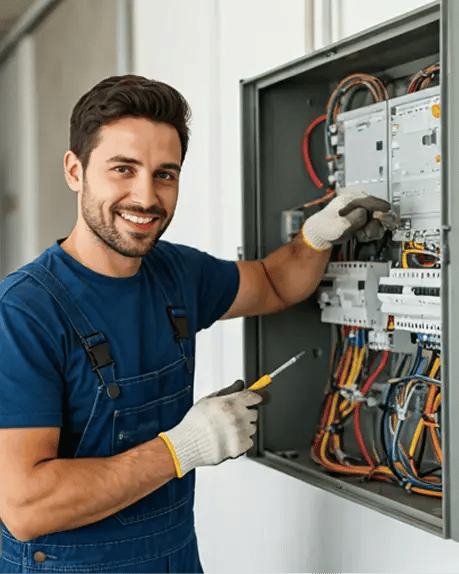
"Our mission is to keep Indianapolis families safe and powered with expert craftsmanship."
Our commitment to 100% code-compliant excellence is reflected in the trust of homeowners and businesses across Indiana.
 Brian
Brian
“Zimmerman Electric Indy has been great to work with. Within two hours of first calling they were on site and provided the estimate. The team went above and beyond what was certainly a challenging installation. I am very impressed and will absolutely recommend them to anyone needing electrical services.”
 Paul Linn
“Zimmerman Electric Indy is fast and efficient. I had messaged them a few days ago and wanted a price to install a Tesla wall charger at my house. He gave me a quote the same day and was able to install it before I brought the vehicle home. They did great work and cleaned up any mess they created after the work was done. They did a great job and would highly recommend them for all your electrical needs.”
 Andrew Bastnagel
“Had a great experience with Zimmerman as they helped me install my home EV charger.They were quick to give an estimate, got me booked within a week and did great work! Highly recommend, great experience all around!”
Brian
“Zimmerman Electric Indy has been great to work with. Within two hours of first calling they were on site and provided the estimate. The team went above and beyond what was certainly a challenging installation. I am very impressed and will absolutely recommend them to anyone needing electrical services.”
Paul Linn
“Zimmerman Electric Indy is fast and efficient. I had messaged them a few days ago and wanted a price to install a Tesla wall charger at my house. He gave me a quote the same day and was able to install it before I brought the vehicle home. They did great work and cleaned up any mess they created after the work was done. They did a great job and would highly recommend them for all your electrical needs.”
Andrew Bastnagel
“Had a great experience with Zimmerman as they helped me install my home EV charger.They were quick to give an estimate, got me booked within a week and did great work! Highly recommend, great experience all around!”
 VERIFIED REVIEWS
Your electrical panel is the most important safety system in your home — and one of the most overlooked. If you live in Indianapolis or the surrounding suburbs of Central Indiana and you're asking yourself whether your home needs a panel upgrade, this guide was written specifically for you.
We'll walk you through everything you need to know: what an electrical panel actually does, the warning signs that mean your panel needs attention right now, what the upgrade process looks like step by step, how much it costs in Indianapolis, and how to choose the right electrical team for the job. No jargon. No runaround. Just honest, complete information from a licensed electrical team that works in your neighborhood every week.
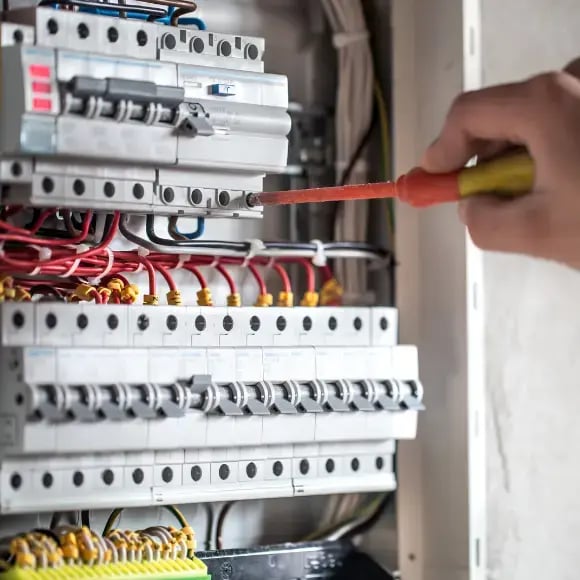
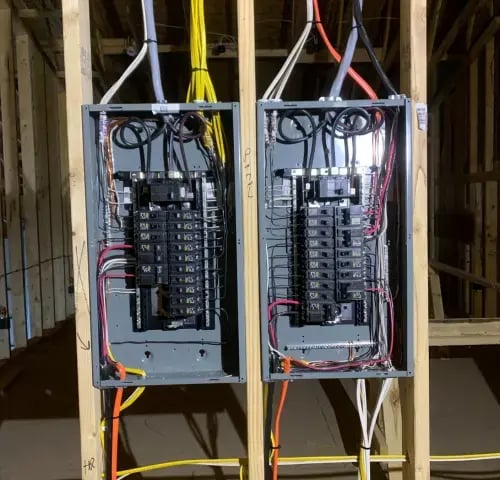
Your electrical panel — also called a breaker box, load center, or service panel — is the central hub that receives electrical power from your utility company (for most Indianapolis homes, that's AES Indiana) and distributes it throughout your home through individual circuits. Every outlet, light fixture, appliance, and system in your house draws power through one of those circuits.
Each circuit is protected by a breaker, which is a safety switch designed to trip — cut power — if the circuit draws more current than it was designed to handle. This protects your wiring from overheating, which is one of the leading causes of residential electrical fires. When your panel is working correctly, breakers trip when they should and reset cleanly. When a panel is failing or undersized, it can't do that job reliably.
Here's the journey electricity takes to reach your outlets and appliances:
The "amperage" of your panel describes the total electrical capacity your home has available at any one time. Think of it like the water pressure and pipe diameter in your plumbing system: more capacity means more can flow at once without pressure dropping.
|
Panel Size |
What It Supports |
|---|---|
|
60-Amp Service |
Found in older homes pre-1960. Cannot support modern appliances. Considered obsolete. |
|
100-Amp Service |
Standard for homes built 1960s–1990s. Adequate for basic loads, but struggles with EV chargers, HVAC upgrades, and multiple high-draw appliances simultaneously. |
|
150-Amp Service |
A middle-ground option for moderate homes without high-demand equipment. |
|
200-Amp Service |
Current standard. Handles modern HVAC, EV chargers, home offices, smart appliances, and future additions with room to spare. |
|
400-Amp Service |
For large homes, significant additions, or homes with substantial electrical equipment like multiple EV chargers or solar + battery systems. |
The National Electrical Code (NEC), which Indiana has adopted, sets the minimum standards for panel sizing in new construction. Homes that haven't been updated often fall short of what today's electrical loads demand — which is why panel upgrades are one of the most common electrical projects in older Indianapolis neighborhoods.
The frustrating truth about electrical panel problems is that they rarely announce themselves dramatically — until they do, and the result is a fire, a failed appliance, or a major safety incident. Most panel issues develop gradually over years of increasing demand and aging components.
Here are the seven most important warning signs that Indianapolis homeowners should know. If you recognize two or more of these in your home, schedule a panel assessment. If you recognize the safety hazards described in signs 5 or 7, treat those as urgent.
Homes built before the early 1980s were wired and paneled for the electrical loads of that era: a few appliances, basic lighting, and maybe a window air conditioner. The modern Indianapolis home has a fundamentally different electrical profile — high-efficiency variable-speed HVAC systems, multiple TVs and computers, smart home systems, home offices with substantial equipment, and increasingly, EV chargers.
If your home is more than 40 years old and has never had its electrical panel replaced or significantly upgraded, it's operating on infrastructure that predates most of what you're plugging into it. That's not just inconvenient — it's a safety concern. Older panels may have components that are no longer reliable, wiring that doesn't meet current code, and breakers that don't protect circuits as designed.
A professional inspection is the starting point. Even if you don't need a full replacement immediately, you'll know exactly what you have and what its limits are.
Occasional breaker trips are normal. A breaker that trips every time you run a hairdryer in the bathroom, or every time the microwave and toaster run at the same time, is telling you something important: your circuits are consistently operating at or near their limits.
Chronic tripping can mean a few different things, and not all of them require a panel upgrade. It might mean a circuit is overloaded and simply needs to be divided into two circuits. It might mean a specific appliance is drawing too much current. But it might also mean your overall panel is undersized for your home's total load — and that's when a full upgrade becomes the right answer.
The key is getting a professional assessment rather than guessing. A licensed electrician can measure actual circuit loads and tell you definitively what's causing the problem and what will fix it.
Fuse boxes were the standard before circuit breakers became universal in the mid-20th century. They function differently: instead of a resettable switch, each circuit has a one-time-use fuse that physically burns out when a circuit is overloaded.
Fuse-based systems are considered obsolete for several important reasons. First, they can't be reset — every overload requires replacing a fuse, which leads to homeowners installing fuses with the wrong amperage rating, which removes the protection entirely. Second, fuse boxes don't meet current electrical code. Third, most homeowners' insurance companies view fuse boxes as a liability and either refuse to cover homes with them or charge significantly higher premiums.
If your Indianapolis home still has a fuse box, upgrading to a modern circuit breaker panel is one of the highest-value electrical investments you can make — for safety, insurability, and home value.
If your lights dim noticeably when your refrigerator compressor kicks on, when the HVAC starts, or when the microwave runs — your electrical system is struggling with load balancing. This is called a "voltage sag" and it's a symptom of an undersized service.
In a properly sized system, the starting surge from a large appliance shouldn't affect the rest of your home's circuits. When it does, it's a sign that your panel is operating close to capacity and doesn't have sufficient reserve to absorb normal load fluctuations.
Occasional, very minor dimming from a large appliance starting may be normal. Pronounced, consistent dimming that you notice every time an appliance cycles on is a warning sign worth investigating.
This is a safety emergency. If you smell burning — especially the distinctive smell of hot insulation or burning plastic — near your electrical panel, turn off your main breaker immediately and call a licensed electrician. Do not delay, and do not wait to see if it goes away.
A burning smell near the panel indicates overheating, which can be caused by a failing breaker, loose connections, or wiring that's been damaged by sustained overloading. Overheating in the panel is a direct fire hazard.
Similarly, if your panel or any of the breakers feel warm to the touch during normal household use, that's abnormal and needs immediate professional attention.
EV chargers are the most common reason Indianapolis homeowners discover their panel needs an upgrade. A Level 2 home EV charger requires a dedicated 240-volt, 50-amp circuit. Many older panels don't have the available capacity to add a circuit of that size without being upgraded first.
The same applies to several other home improvements and additions:
The right approach is always to have your panel assessed before adding any major equipment. Adding high-draw appliances to an already-strained panel creates exactly the conditions that lead to overheating and electrical fires.
This is the most serious warning sign on this list. Two panel brands — Federal Pacific Electric (FPE) with their Stab-Lok breakers, and Zinsco (also sold under the GTE-Sylvania name) — have been identified in electrical engineering and insurance industry studies as having significant safety defects.
The documented problem with both brands is that their breakers fail to trip when they should. A breaker that doesn't trip is no longer a safety device — it's a fire risk. Heat builds in the wiring, insulation melts, and the conditions for an electrical fire develop without the protection that the breaker was supposed to provide.
Many Indianapolis-area insurance companies have responded to this risk by refusing to cover homes with Federal Pacific or Zinsco panels, or by requiring their replacement as a condition of coverage. If you don't know what brand your panel is, check the door label. Federal Pacific panels typically say "Federal Pacific" or "Stab-Lok" on the interior label. Zinsco panels say "Zinsco" or "GTE-Sylvania."
If you have either brand, we strongly recommend scheduling a panel replacement — not just an assessment, a replacement. These panels are not a "wait and see" situation.
|
Panel Brand |
Recommendation |
|---|---|
|
Federal Pacific (FPE / Stab-Lok) |
Replace immediately. Do not wait for symptoms. Documented breaker failure risk. |
|
Zinsco / GTE-Sylvania |
Replace immediately. Same documentation of breaker failure as FPE. |
|
Pushmatic (Bulldog) |
Evaluate. Breakers may be difficult to source; professional assessment recommended. |
|
Square D, Siemens, Eaton, Leviton (current) |
Standard modern panels. Inspect for age and capacity, but brand is not a concern. |
|
Cutler-Hammer (older CH series) |
Inspect for age and condition. Generally reliable but age matters. |
This is the question every Indianapolis homeowner asks first, and we're going to answer it directly — because cost transparency is something we believe in. Here's the honest breakdown of what panel upgrades cost in Indianapolis and Central Indiana.
Panel upgrade costs vary based on several specific factors: the size of the new panel you're installing, whether your service needs to be upgraded from the utility (AES Indiana), the condition and configuration of your existing panel, and whether any additional work is needed to bring your system up to current code. Here are the typical ranges:
|
Project Type |
Typical Cost Range (Indianapolis) |
|---|---|
|
100-amp panel replacement (same size) |
$2,500 – $3,000 |
|
Panel upgrade (to 150-amp or 200-amp) |
$2,500 – $3,000 |
|
Whole-home service upgrade to 100A (meter, riser, panel) |
$3,200 |
|
Whole-home service upgrade to 200A (meter, riser, panel) |
$4,200 |
|
Federal Pacific / Zinsco panel replacement |
$2,500 – $3,000 |
|
Level 2 charger installation (labor only) |
$595 base; $595 – $2,000 range |
|
Level 2 charger unit (supply only) |
$450 – $750 |
Disclaimer: All pricing shown is estimated and intended as a general reference only. Actual project pricing is subject to change based on market conditions, material costs, site conditions, scope of work, and other project-specific factors.
These ranges aren't fixed prices — they're starting points. The final cost of your specific project depends on several factors that a free in-home assessment will clarify:
Upgrading from 100-amp to 200-amp service requires a larger, more capable panel and sometimes larger wiring from the service entrance. The panel itself — the physical unit that holds the breakers — is a significant part of the cost, and 200-amp panels cost more than smaller alternatives.
If you're increasing your service from 100-amp to 200-amp, AES Indiana (Indianapolis Power & Light) typically needs to upgrade the service entrance wiring from the utility pole or underground service to your home. This work is coordinated with the utility and adds to the project scope. Zimmerman Electric Indy handles this coordination on your behalf.
Some older panels were installed in ways that don't meet current NEC requirements. Bringing the installation up to code — proper grounding, correct wire sizing, arc fault circuit interrupter (AFCI) and ground fault circuit interrupter (GFCI) requirements — can add to the scope. This is work that needs to be done, and any legitimate electrician will include it.
Panel upgrades require a permit in Indianapolis and throughout Marion County and surrounding jurisdictions. Permit fees vary by municipality but typically range from $75 to $250. Zimmerman Electric Indy handles the permit application and coordinates the required inspection — this is included in our process, not added as a surprise fee.
A panel in an easily accessible utility room is simpler to work on than one in a tight crawlspace or behind finished walls. Access affects labor time, which affects cost.
In some circumstances, electrical panel upgrades may qualify for federal tax credits, particularly when the upgrade enables the installation of qualified energy-efficient equipment (like EV chargers or heat pumps) or when it's part of a broader home energy improvement project. The Inflation Reduction Act of 2022 expanded these credits, though eligibility requirements are specific.
We recommend consulting a tax professional for advice specific to your situation. We can provide the documentation of your panel upgrade needed to support a tax credit claim.
One of the most common reasons homeowners delay electrical panel upgrades is uncertainty about what the process involves. Will it take days? Will my power be off the whole time? Who handles the permits? What happens during the inspection?
Here's exactly what happens when you have Zimmerman Electric Indy upgrade your electrical panel — from the first call to the final walkthrough.
Every panel upgrade project starts with a free, no-obligation in-home assessment. There's no charge for this visit, and there's no pressure to commit.
During the assessment, our licensed electrician will:
This assessment usually takes 30–60 minutes. You'll leave with a written quote and a complete picture of what your home's electrical system needs. You decide if and when to move forward.
Panel upgrades require a permit in Indianapolis (Marion County) and throughout all surrounding jurisdictions where Zimmerman Electric Indy works. This is not optional, and any electrician who suggests skipping the permit is putting you at significant risk.
Unpermitted electrical work:
Zimmerman Electric Indy handles the entire permit process. We submit the application, coordinate with the relevant permitting authority, and schedule the required inspection. You don't have to navigate any of this — we handle it completely.
If your upgrade involves increasing your service amperage — for example, going from 100-amp to 200-amp — we coordinate with AES Indiana (Indianapolis Power & Light) to arrange the service entrance upgrade. This is the work that upgrades the utility connection to your home to support the higher amperage.
AES Indiana schedules this work on their end, and we coordinate the timing with your installation date so that everything happens in the right sequence. This coordination is a normal part of the panel upgrade process for service increases — Zimmerman Electric Indy manages it on your behalf.
On installation day, your main power will be off for the duration of the work. For a standard panel replacement, this is typically one full working day — 6 to 8 hours. We'll discuss the expected timeline with you in advance so you can plan accordingly.
Here's what our team does on installation day:
Throughout the process, our team protects your home: shoe covers on, work area kept organized and clean, and no mess left behind when we're done.
After installation, Zimmerman Electric Indy schedules and passes the required electrical inspection with the city or county building department. An inspector from the relevant authority visits your home to verify that the work meets the National Electrical Code (NEC) requirements adopted in Indiana.
This inspection is a requirement, not an optional add-on. Passing it means your work is documented as code-compliant — which matters for insurance, resale, and simply knowing the work was done right.
You receive a copy of the permit and the inspection approval for your records. These documents are important and should be kept with your home's records.
Before we leave, we walk you through your new panel completely. We explain:
Every circuit in your new panel will be clearly labeled when we leave. No more guessing which breaker controls the kitchen outlets — you'll have a complete, accurate panel directory.
We've mentioned these panel brands twice already in this guide because they're common enough in Central Indiana that this section needs its own dedicated attention. If you live in an Indianapolis home built between 1950 and 1990, there's a real chance your home has one of these panels — and a significant chance you don't know it.
Federal Pacific Electric (FPE) was one of the most popular panel manufacturers in the United States during the 1950s through the 1980s. Their Stab-Lok breaker design was installed in an estimated 28 million homes across the country. Many of those homes still have these panels in place.
The problem, documented extensively by electrical engineers and fire investigators beginning in the 1980s, is that Stab-Lok breakers have a documented failure rate when it comes to tripping under overload conditions. Studies by researcher Jesse Aronstein and others found that a significant percentage of FPE Stab-Lok breakers failed to trip during testing — meaning they would not have protected the circuit in a real overload situation.
A breaker that doesn't trip when the circuit overloads means heat builds in the wiring unchecked. That heat can reach ignition temperatures in wall cavities where no one can see it — until the fire has already started.
The Consumer Product Safety Commission (CPSC) investigated FPE in the 1980s but did not issue a formal recall. That limited regulatory action has led to confusion about how serious the risk is. The answer from the electrical engineering community is consistent: these panels should be replaced.
Zinsco (also sold under the GTE-Sylvania name) has a different but equally concerning failure mode. In Zinsco panels, the breakers can bond — literally fuse — to the bus bars inside the panel over time. When this happens, a breaker that has tripped cannot be reset, and more dangerously, a breaker that needs to trip sometimes cannot.
Zinsco also used aluminum bus bars that are subject to corrosion over time, and the breaker designs have been found to overheat at their connections. The combination of potential breaker bonding and overheating connections makes Zinsco panels a serious safety concern in any home where they're still installed.
You don't need to be an electrician to check what panel you have. Here's how:
If you have either panel, call us. Don't put this off. We can schedule a free assessment and give you a written quote for replacement. The conversation is free and there's no pressure.
Beyond eliminating safety risks, a panel upgrade delivers a range of concrete benefits that affect your daily life, your home's systems, and its long-term value. Here's what changes when you upgrade:
Modern panels with properly rated, functioning breakers provide the protection your home's wiring needs. Overloaded circuits trip instead of overheating. Defective or aging components are replaced with reliable modern equipment. The fundamental fire risk associated with outdated, overloaded, or defective panels is eliminated.
A 200-amp panel gives your home the headroom to add an EV charger, upgrade your HVAC system, finish your basement, add a home office circuit, or install a whole-home generator — without worrying whether your panel can handle it. You stop managing your home's electrical loads and start simply using your home.
Many insurance companies in the Indianapolis area refuse to cover homes with Federal Pacific, Zinsco, or other defective panels. Even for homes with simply outdated 60- or 100-amp service, some insurers charge higher premiums or require upgrades before binding coverage.
A modern, permitted panel upgrade removes this insurance liability and may reduce your premiums. More importantly, it means your coverage is valid if you ever need to file a claim related to electrical issues.
In the Indianapolis real estate market, electrical panel condition is a required disclosure item — and a known liability if it's outdated. Buyers' home inspectors flag outdated panels, defective brands, and undersized service, and those flags create negotiation leverage for the buyer or, in some cases, kill deals entirely.
A modern, properly sized panel is a positive disclosure item. It demonstrates that the home has been maintained and updated, and it eliminates a common objection for buyers and their lenders.
No more breakers tripping during normal use. No more lights flickering when the refrigerator compressor kicks on. No more juggling which appliances can run at the same time. A properly sized panel delivers consistent, reliable power to every circuit in your home — because that's what it's designed to do.
Electrical code exists for safety. A panel upgrade performed by a licensed electrician and inspected by the city or county brings your home's electrical system into compliance with the NEC as adopted in Indiana. This protects your investment, your insurance coverage, and your family.
Electric vehicle ownership is growing rapidly in Indianapolis and throughout Central Indiana. And with that growth comes one of the most common questions Zimmerman Electric Indy receives: does adding an EV charger require a panel upgrade?
The answer depends on your current panel. Here's what you need to know.
A Level 2 home EV charger — the type that can fully charge most electric vehicles overnight — requires a dedicated 240-volt, 40-to-50-amp circuit. This is the same type of circuit used by an electric dryer or an electric range.
For a home with a modern 200-amp panel that has available capacity, adding this circuit is often straightforward — no panel upgrade required, just the circuit and outlet or hardwired charger installation.
But for a home with a 100-amp panel, a fuse box, or a panel that's already running near capacity with existing loads, there may not be room to add a 50-amp circuit without upgrading the panel first. Adding a large circuit to a panel that can't safely support it creates exactly the overloading conditions that lead to problems.
If your home needs both a panel upgrade and an EV charger installation, there's a real efficiency advantage to doing both at the same time. The panel is already open, the permit covers both projects, and the coordination with AES Indiana (if a service upgrade is needed) happens once instead of twice.
Zimmerman Electric Indy regularly completes panel upgrade and EV charger installation as a single project. It's typically more cost-effective than doing them separately, and it's more convenient — one crew, one permit, one inspection.
Electrical permits are one of those topics that homeowners sometimes want to skip — the assumption being that permits are just bureaucratic overhead and unnecessary expense. That assumption is wrong, and the consequences of unpermitted electrical work are significant enough that this section needs to be addressed directly.
The National Electrical Code (NEC) — which Indiana has adopted — requires a permit for electrical panel work. This isn't a local quirk; it's a code requirement based on the safety complexity of work inside the main service panel.
Panel work involves your home's full electrical service, which remains energized at the utility connection even when your main breaker is off. It requires specific knowledge of safe work procedures, proper panel installation, and current code requirements for grounding, AFCI/GFCI protection, and circuit sizing. The permit and inspection process is how the city or county verifies that this work was done correctly.
The consequences of unpermitted panel work extend well beyond a fine from the city. Here's the full picture:
Every panel upgrade Zimmerman Electric Indy performs is permitted and inspected. We handle the permit application, coordinate the inspection, and ensure the work passes. This is not an add-on — it's part of what we do.
Indiana has adopted the National Electrical Code (NEC). For panel upgrades, the current code requirements include:
These requirements exist because they've been proven to save lives. A licensed electrician who pulls a permit and passes inspection is confirming that all of these requirements have been met in your home.
A panel upgrade is not a commodity service where the cheapest quote is the best option. It's one of the most consequential electrical projects you can have done in your home, and choosing the right electrician matters enormously. Here's what to look for.
Indiana requires electricians to be licensed. A licensed electrician has demonstrated competency in the NEC and Indiana's electrical code requirements. They are legally authorized to perform electrical work and pull permits.
Hiring an unlicensed electrician for panel work puts you at serious risk: the work may not meet code, the permit (if pulled at all) may not be valid, and your insurance coverage may be affected. Always verify that your electrician holds a current Indiana electrical license before they start work.
Insurance is equally important. Ask for a certificate of general liability insurance and workers' compensation coverage before any work begins. If an uninsured worker is injured at your home, you may be liable.
Zimmerman Electric Indy is fully licensed in Indiana and carries full liability and workers' compensation insurance. We provide documentation upon request.
A trustworthy electrician provides written estimates with itemized scope of work before any project begins. If an electrician quotes you a price verbally and won't put it in writing — or if the written quote has vague line items that could justify surprise charges later — that's a red flag.
At Zimmerman Electric Indy, every estimate is written, itemized, and provided before we schedule any work. What's on the estimate is what you pay. No hidden fees. No surprise charges. No pressure to add on work you didn't ask for.
Any legitimate electrician performing panel work will pull the required permit. If an electrician suggests doing the work without a permit to save money or time, walk away. As we've discussed, the consequences of unpermitted work are significant — and a contractor who suggests it is telling you something about how they operate.
Zimmerman Electric Indy handles the full permitting process for every panel upgrade. We apply for the permit, coordinate the inspection, and ensure the work passes. You don't have to think about any of it.
A local electrician has their reputation at stake in the community where they work. They're not a national franchise sending whoever's available — they're neighbors who will still be operating in Indianapolis next year and the year after.
Verify reputation through Google reviews, the Better Business Bureau, and personal referrals. Look for consistent patterns in reviews: are customers mentioning specific electricians by name? Are they describing the same qualities — clean work, on time, clear communication, no pressure? That's what you're looking for.
Zimmerman Electric Indy is owned and operated by Zach and Kara Zimmerman. It's a family business, and Zach and Kara personally stand behind every project their team completes. That accountability runs through the entire company — from the estimate to the inspection.
The difference between a family-owned electrician and a franchise or large corporate electrical company isn't always about quality — it's about accountability. When you call Zimmerman Electric Indy, real people answer. When something needs to be addressed, you reach the team that did the work, not a call center.
Zimmerman Electric performs electrical panel upgrades and replacements throughout Indianapolis and the surrounding Central Indiana communities. Here's our full service area:
We serve the entire Indianapolis metro including all neighborhoods within Marion County: Downtown Indianapolis, Broad Ripple, Meridian-Kessler, Southport, Lawrence, Speedway, Beech Grove, Homecroft, Warren, Pike, Wayne, Decatur, and all other Indianapolis neighborhoods and townships.
Carmel, Fishers, Noblesville, Westfield, and Sheridan. Hamilton County represents one of our most active service areas — these communities have significant older housing stock alongside rapid new construction, and demand for panel upgrades is high throughout the county.
Avon, Plainfield, Brownsburg, Danville, and surrounding communities.
Greenwood, Franklin, Bargersville, Whiteland, and surrounding communities.
Zionsville, Lebanon, Whitestown, and surrounding communities.
Mooresville, Martinsville, Shelbyville, and Greenfield, along with other communities in these surrounding counties.
Not sure if we serve your area? Call us at 317-939-9197 and we'll confirm right away. If we can't help you, we'll do our best to point you toward a qualified resource.
An outdated or defective electrical panel is one of those problems that gets more expensive — and more dangerous — the longer it's left unaddressed. Whether your panel is showing clear warning signs or you simply want to know what you have, a free assessment from Zimmerman Electric Indy gives you complete information and zero obligation.
Contact us today to schedule a free estimate and take the next step toward a safer, smarter, and more efficient home.
Get a professional assessment and a clear, no-obligation quote from our expert Indianapolis team.
Stay informed with practical tips and expert advice from Zimmerman Electric Indy.
A residential electrical safety inspection checklist covers ten core areas every.
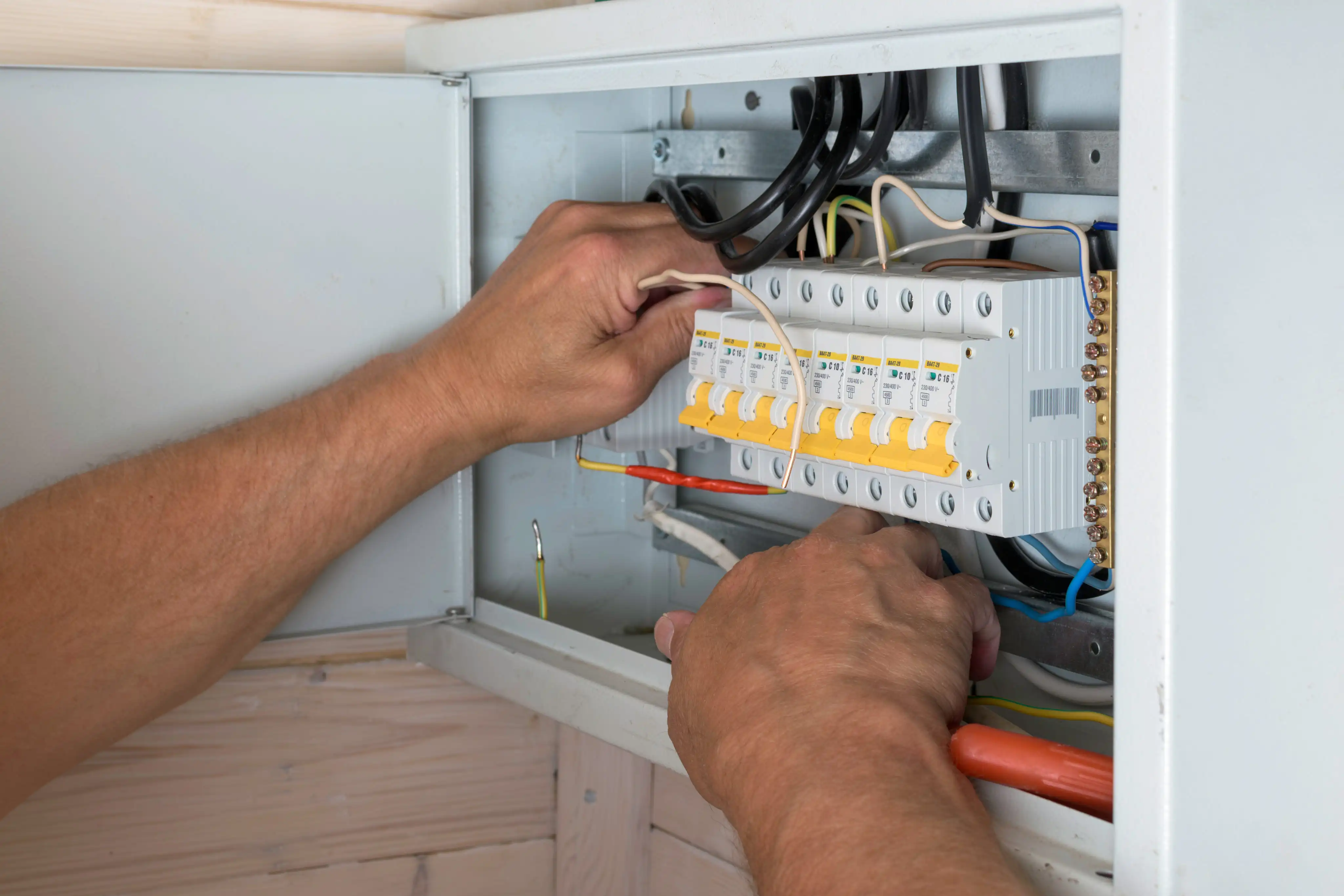
Your electrical panel is the heartbeat of your home's electrical system. Every l.

Installing Electric Vehicle chargers is a good idea. But making sure they keep w.