
What to Do When a Circuit Breaker Keeps Tripping
|
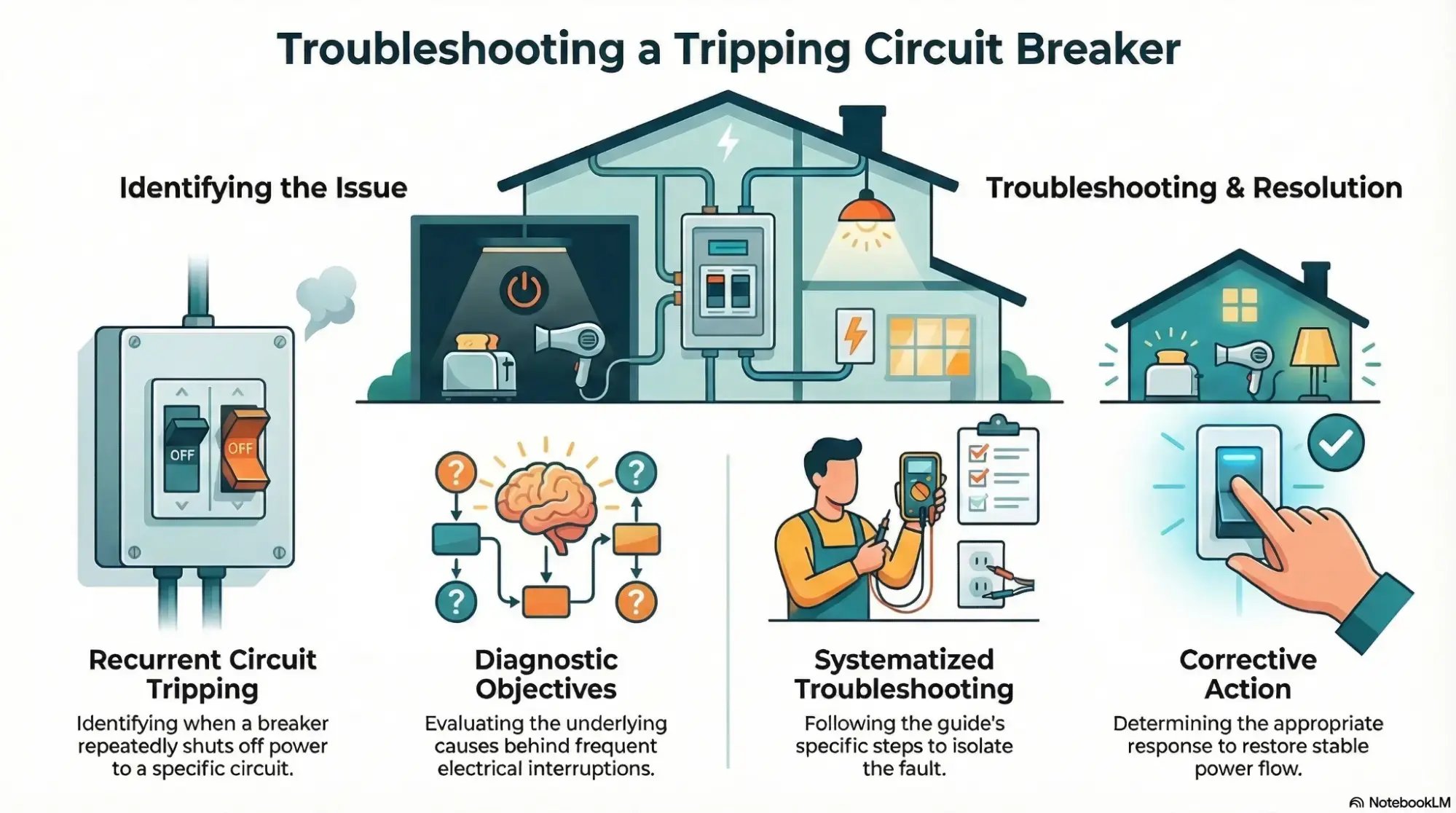
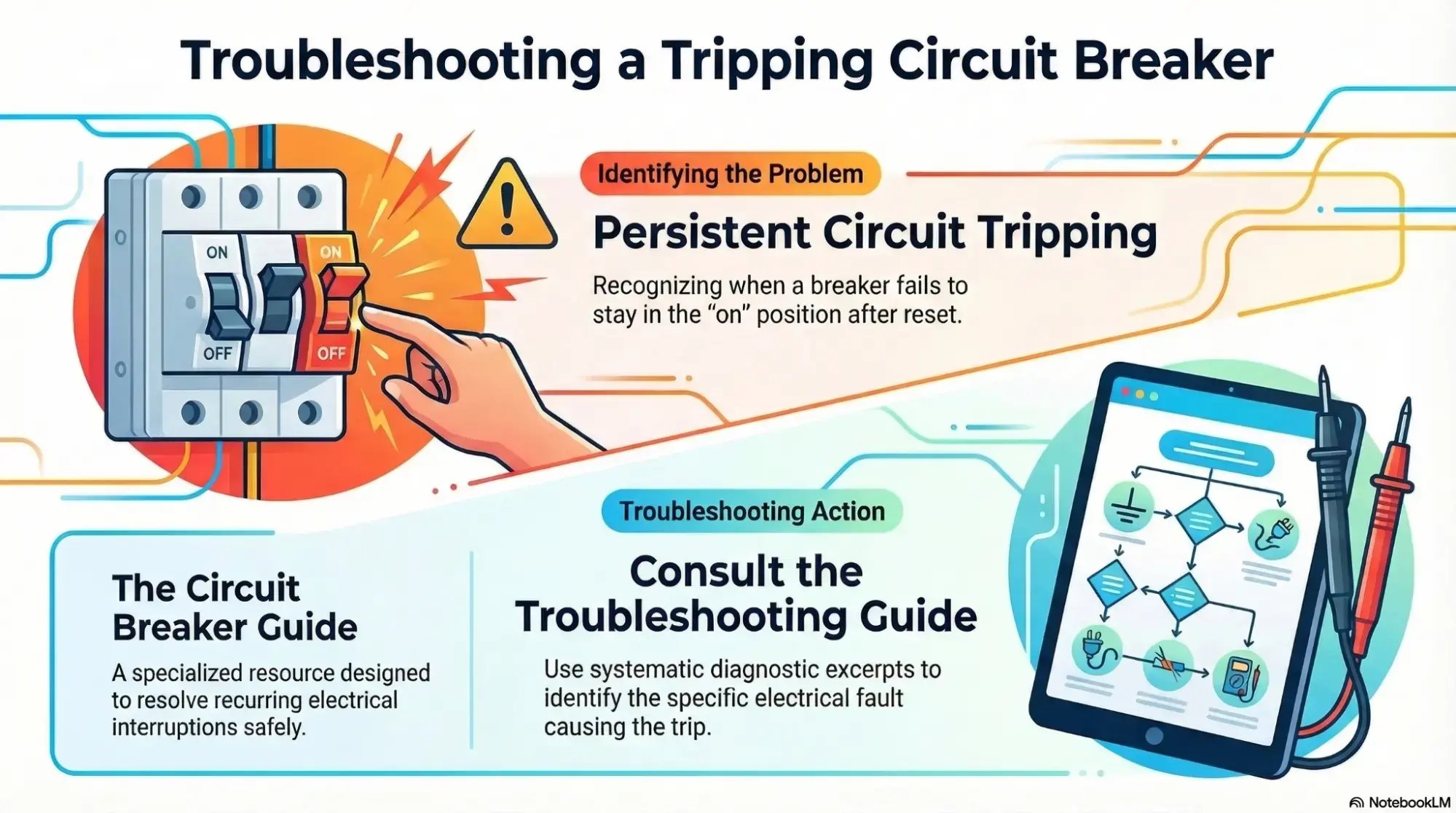
Quick Answer When a circuit breaker keeps tripping, do this immediately: (1) Turn off all devices on that circuit. (2) Reset the breaker by pushing it fully to the OFF position before switching to ON. (3) If it trips again immediately, stop and call a licensed electrician. A breaker that repeatedly trips is not a nuisance. It is your electrical system telling you there is an overloaded circuit, a short circuit, or a ground fault that needs professional diagnosis. |
A tripping circuit breaker is one of the most common calls we handle at Zimmerman Electric Indy across Indianapolis and Central Indiana. And while it might feel like an annoying inconvenience, a breaker that trips repeatedly is never something to ignore.
Circuit breakers are safety devices. They are designed to trip, meaning shut off power to a circuit, when they detect a condition that could damage your wiring or cause a fire. When a breaker trips once and resets without incident, it may have simply caught a momentary overload. When a breaker keeps tripping after you reset it, your home is giving you a clear warning that something in the electrical system needs attention.
In this guide we will walk through the three root causes of repeated tripping, show you exactly what to do right now, and explain when it is time to stop resetting the breaker and call a licensed electrician. For a full overview of our residential electrical repair services throughout Central Indiana, visit our Residential Electrical Services page.
Why Breakers Trip: The 3 Root Causes
Every tripping breaker traces back to one of three root causes. Understanding which one is causing your problem is the key to deciding whether you can handle the situation yourself or whether you need a licensed electrician.
Root Cause 1: Overloaded Circuit
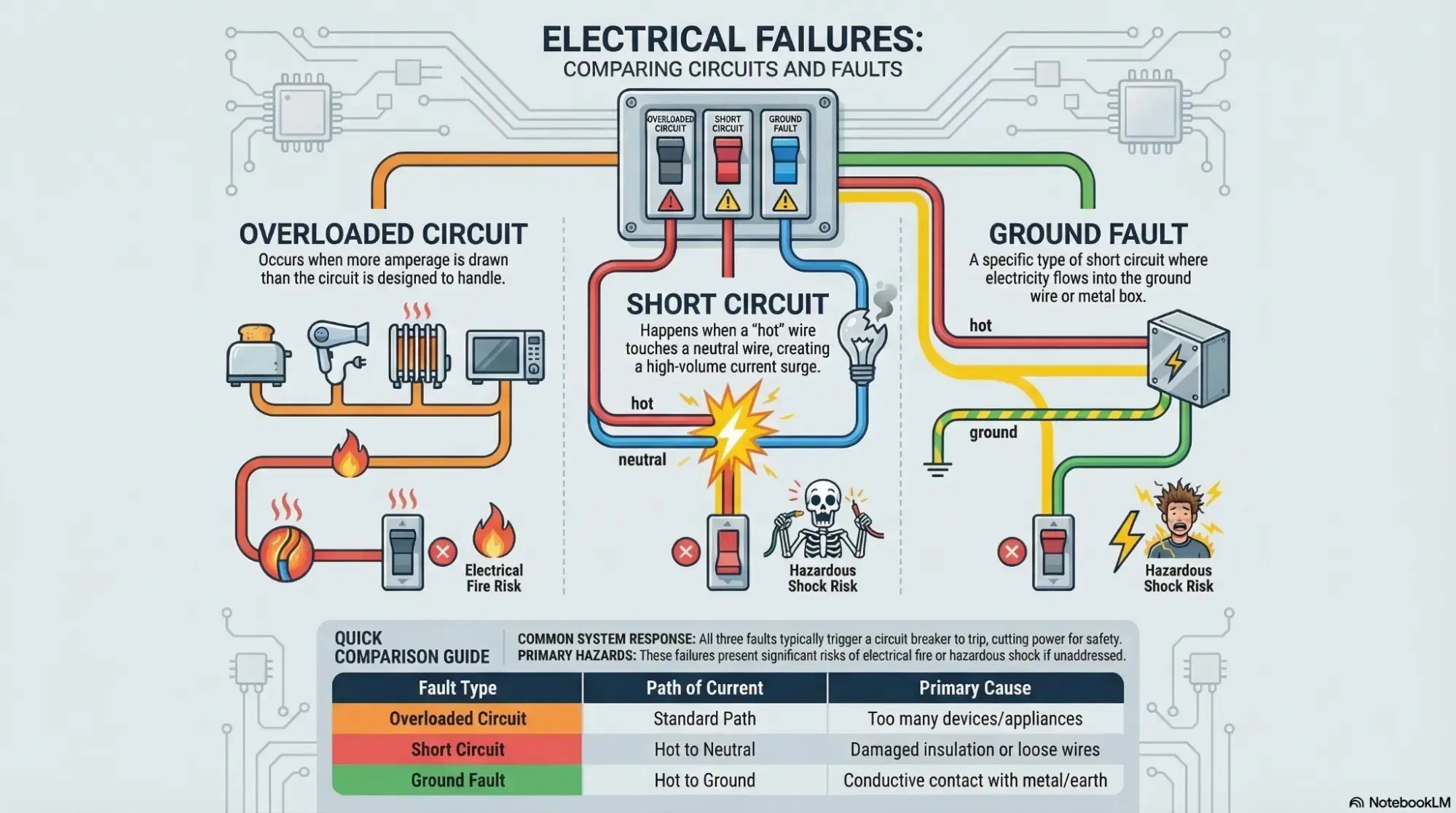
An overloaded circuit is the most common reason a breaker trips, and it is also the least urgent. It happens when the total electrical load on a circuit exceeds the amperage rating of the breaker protecting it. The breaker does exactly what it is designed to do: it senses the excess heat from the overcurrent and shuts off power before the wiring can overheat.
In practical terms, this usually happens when too many high-draw appliances run simultaneously on the same circuit. A 15-amp kitchen circuit shared by a microwave, a coffee maker, a toaster, and a blender will regularly approach or exceed its safe operating limit.
|
Common Signs of an Overloaded Circuit:
|
Root Cause 2: Short Circuit
A short circuit is a more serious condition. It happens when a hot wire (the live wire carrying current) makes direct contact with a neutral wire or with the ground wire inside an outlet, appliance, or fixture. This creates a sudden, massive surge of current that trips the breaker almost instantaneously.
Short circuits can occur inside the wiring of the building itself, inside a faulty appliance cord, or at a damaged outlet or junction box. A burning smell, a popping sound at the moment of the trip, or visible charring around an outlet are all signs that a short circuit may be involved. Short circuits require professional diagnosis and repair. Do not repeatedly attempt to reset a breaker if any of these signs are present.
Root Cause 3: Ground Fault
A ground fault is similar to a short circuit, but specifically involves current flowing from a hot wire to a ground wire or to any grounded surface, including a metal junction box, wet flooring, or a person's body. Ground faults are particularly dangerous in areas with moisture, such as bathrooms, kitchens, garages, and outdoor circuits.
GFCI (ground fault circuit interrupter) outlets and breakers are designed to detect ground faults and shut off power in a fraction of a second before a fatal shock can occur. If your GFCI outlet is tripping rather than a standard breaker, the diagnostic process is slightly different, though the underlying causes are similar.
Overloaded Circuit vs Short Circuit vs Ground Fault: Side-by-Side Comparison
If you are trying to figure out which of the three causes is affecting your home, this comparison table will help you identify the most likely culprit based on what you are actually experiencing.
|
Factor |
Overloaded Circuit |
Short Circuit or Ground Fault |
|
How fast does the breaker trip? |
Usually trips after a sustained load (seconds to minutes) |
Trips almost instantly, often with a pop or spark |
|
Does it reset successfully? |
Usually resets if you unplug devices first |
Often trips again immediately even with nothing plugged in |
|
Is there a burning smell? |
Rarely, unless the overload has been severe |
Often yes, especially near the outlet or panel |
|
Which appliance causes it? |
Multiple appliances together cause the trip |
Often one specific appliance or outlet is responsible |
|
Is the outlet or switch discolored? |
Typically no |
Often yes, look for scorch marks or darkening |
|
Urgency level |
Schedule soon -- add dedicated circuit if frequent |
Call today -- do not reset without professional diagnosis |
Step-by-Step: What to Do Right Now When Your Breaker Trips
Follow these steps in order. Each step either resolves the problem or gives you critical diagnostic information before deciding whether to call an electrician.
|
The 6-Step Breaker Reset Process
|
|
Important Safety Note from Zimmerman Electric: Never use tape or a foreign object to hold a breaker in the ON position. Never replace a breaker with a higher-amperage breaker to prevent it from tripping. These actions bypass the only safety device protecting your home's wiring from overheating and fire. If a breaker will not stay on, the correct answer is an electrician, not a workaround. |
Reset vs Replace: How to Decide What Your Breaker Needs
Not all tripping breakers need to be replaced. But some do, and it is important to understand the difference. Here is a straightforward guide to help you determine whether a reset is sufficient or whether the breaker itself is past its useful life.
|
Scenario |
What It Means and What to Do |
|
Breaker trips once after a heavy load, resets fine, and does not trip again |
This is normal behavior. Reduce the load on that circuit going forward. No replacement needed. |
|
Breaker trips consistently when a specific appliance runs |
The appliance may be drawing more amperage than expected, or the circuit may need a dedicated circuit for that appliance. Have an electrician assess the load. |
|
Breaker trips repeatedly with only normal loads on the circuit |
The breaker is likely failing or undersized for the circuit's actual demand. Professional inspection recommended. |
|
Breaker trips immediately on reset, even with nothing plugged in |
Short circuit or ground fault on the circuit wiring. Do not reset again. Call an electrician today. |
|
Breaker feels warm or hot to the touch |
A warm breaker indicates it has been handling excess current. This is a sign of both a potential circuit problem and a potential breaker failure. |
|
Breaker is visibly discolored, corroded, or the panel is more than 25 years old |
The breaker may be failing due to age. Federal Pacific Stab-Lok and Zinsco panels common in older Indianapolis homes have documented breaker failure rates and warrant urgent inspection. |
|
Breaker will not stay in the ON position regardless of load |
The breaker mechanism itself has failed. It must be replaced by a licensed electrician. |
A standard single-pole circuit breaker replacement in Indianapolis typically costs between $150 and $350 including labor. If your breaker issue turns out to involve the panel itself, a full electrical panel upgrade from 100 to 200 amps in Indianapolis runs approximately $1,800 to $4,200 including permits. Zimmerman Electric provides free estimates for both breaker replacements and full panel upgrades throughout Central Indiana.
When to Call an Emergency Electrician for a Tripping Breaker
Some tripping breaker situations go beyond a simple fix and move into genuine emergency territory. If any of the following apply to your situation, call our emergency electrician line at 317-548-0082 right away rather than attempting further resets.
|
Call an Emergency Electrician Immediately If:
For the fastest response across Indianapolis, Carmel, Fishers, Zionsville, Brownsburg, Greenwood, and all eight Central Indiana counties, call Zimmerman Electric at 317-548-0082. We offer same-day service for urgent electrical issues. |
Same-Day Circuit Breaker Replacement Near Me in Indianapolis
When a breaker fails and will not hold, same-day service matters. You cannot leave a critical circuit offline, and you should not attempt to bypass a failed breaker on your own. Zimmerman Electric provides same-day circuit breaker replacement and circuit repair throughout the Indianapolis metro area and all of Central Indiana.
Our licensed electricians carry the most common residential breaker types and amperage ratings on every service vehicle, which means most standard single-pole and double-pole breaker replacements can be completed in a single visit. We also carry tandem breakers and GFCI and AFCI breakers required by current NEC code for kitchens, bathrooms, bedrooms, and outdoor circuits.
|
Service Areas for Same-Day Breaker Replacement:
|
|
Breaker Won't Stay On? We Can Help Today. Zimmerman Electric Indy offers same-day circuit breaker replacement and panel diagnostics throughout Indianapolis and Central Indiana. Licensed, insured, and BBB-accredited. Call or text: 317-548-0082 | Free estimate at zimmermanelectricindy.com |
Frequent Tripping and Your Electrical Panel: Is an Upgrade Needed?
A single breaker tripping occasionally is a circuit-level problem. But if you find that multiple breakers in your home are tripping frequently, or if you are regularly having to reset different breakers throughout the month, that pattern often points to a panel-level issue rather than a circuit-level one.
The most common panel-related cause of frequent tripping in Indianapolis homes is an undersized service. Many homes built before 1990 in Marion County, Hendricks County, and Johnson County were originally built with 100-amp service panels. At the time of construction, that was entirely adequate. Modern households running central air conditioning, multiple refrigerators, electric ranges, EV chargers, and home office equipment routinely need 150 to 200 amps of service capacity to operate safely and without chronic overloading.
If your home has a 100-amp panel and your breakers are tripping with increasing frequency, the panel is telling you it is operating too close to its capacity limit. We handle electrical panel upgrades throughout Central Indiana, including full 200-amp service upgrades with all required permits. A panel upgrade typically takes one day and resolves chronic tripping problems for the long term.
The same logic applies if your home has a Federal Pacific Stab-Lok or Zinsco panel. Both brands were widely installed in Indianapolis-area homes during the 1960s and 1970s, and both have documented failure rates. Federal Pacific breakers in particular have been shown to fail to trip under overload conditions in independent testing, which creates a significant fire risk. If you have one of these panels and you are experiencing any breaker issues at all, an inspection and upgrade should be a priority.